Showing posts with label Bullet Journal. Show all posts

Monday, January 1, 2018

My Genealogy Bullet Journal, One Year Later


What a different a year makes! My first entry in my new Genealogy Bullet Journal was made on January 1, 2017. In it, I recorded information about the family I had been researching in some JSTOR journals and that I had (finally) spent 15 minutes filing some of my pile of documents. But then, life happens.

For our family, 2017 left us pummelled by the unexpected. We were faced with the impact of the deaths of three wonderful family members, one of whom was my husband. And so, I've been on a break from research and blogging for a while. And genealogy and my genealogy bullet journal and many other parts of my normal daily life had been pushed aside. I continued to deal with probate documents, marriage certificates, deeds, titles, but now as a part of dealing with life itself.

Time to start back. Lately I have been feeling the desire to get back to researching my family and that of my husband, and my genealogy bullet journal is starting to prove helpful in ways I had not previously anticipated, including such things as

  • I can look back over my last entries written months ago and pick up on that train of thought. 
  • I can glance at my efforts documented in parts of 2017 and consider where I had success, what resources I may want to further explore, and whether I want to continue pursuing certain questions.
  • I still have that section of possible research questions that can provide a different starting point for my research.
  • My Genealogy Bullet Journal will help me corral my thoughts, especially while I am still so sporadic in my research time and efforts.

Time for Goal Setting. One of the first things I hope to do in the coming weeks is to use the Goal Setting Worksheet  developed by The Occasional Genealogist. This document, available when you subscribe to her blog, looks like it will help me focus on what I have done as well as what I hope to accomplish. My bullet journal will be just the place to record and keep this information for future reference.

Time for a new journal. With only a few blank pages remaining in my 2017 Genealogy Bullet Journal, I knew I would be needing a new journal soon after the start of 2018. Whenever I was in a craft or office supply store in the early fall, I had been looking at their journal offerings. I finally decided to purchase the TUL discbound notebook system several months ago when I found the one I wanted on sale.  I chose to move to a discbound system for the ease in adding and removing pages such as copies of maps, calendars, family record sheets, even pages from the collection section of my old Genealogy Bullet Journal. I can just trim the copy, punch holes along the side, and then add the additional pages into my new Journal without having to hand copy the information into the new journal. Admittedly, I also love the size (A5) and feel of my TUL, and the color of the cover (rose gold) is just right. And yes, I splurged and bought a special hole punch to make things easier.


Time for some changes to my journal. There is one more big change I'm planning to make with my new discbound journal. I'm actually going to consider it as two different journals, both housed in one book. I will be adding a cardstock divider between my 2-page weekly spreads and the Collections section of my journal. I've realized that my weekly work is somewhat temporary, referred to within a more recent time period while my Collections tend to be permanent, resources to which I will continually add information and use. Each of the Weekly and the Collections sections will have its own index and numbering system. I'll probably number pages in one section in black, the other in blue ink. That way should a page come loose or be removed from the journal, it should be easy to return it to its proper place. This is a change I have been mulling over for six months or more. We'll see how I like this plan by the end of 2018.

So, once again my Genealogy Bullet Journal is proving to be an important tool in my genealogy research. It has been a part of what I have done in the past year, and it will continue to be a part of what I do in the future. Even writing about my journal has given me more of a desire to venture back into research again. 

On a more personal note, my separate, personal bullet journal has also been an important part of my life as it helped me keep up with the myriad details following my husband's death, keeping up with the who, what, when, where, and why of appointments, legal documents, and to-do lists. Both journals have been part of keeping up with life. My genealogy bullet journal focuses on the past; my personal one deals primarily with the present and future. All in all, a bullet journal can be just as individual as the one who creates it and uses it. I'm proof of that.

#bulletjournal #genealogybulletjournal #genealogyresources    


Thursday, August 24, 2017

It Never Hurts To Go Looking: Courthouse Treasures


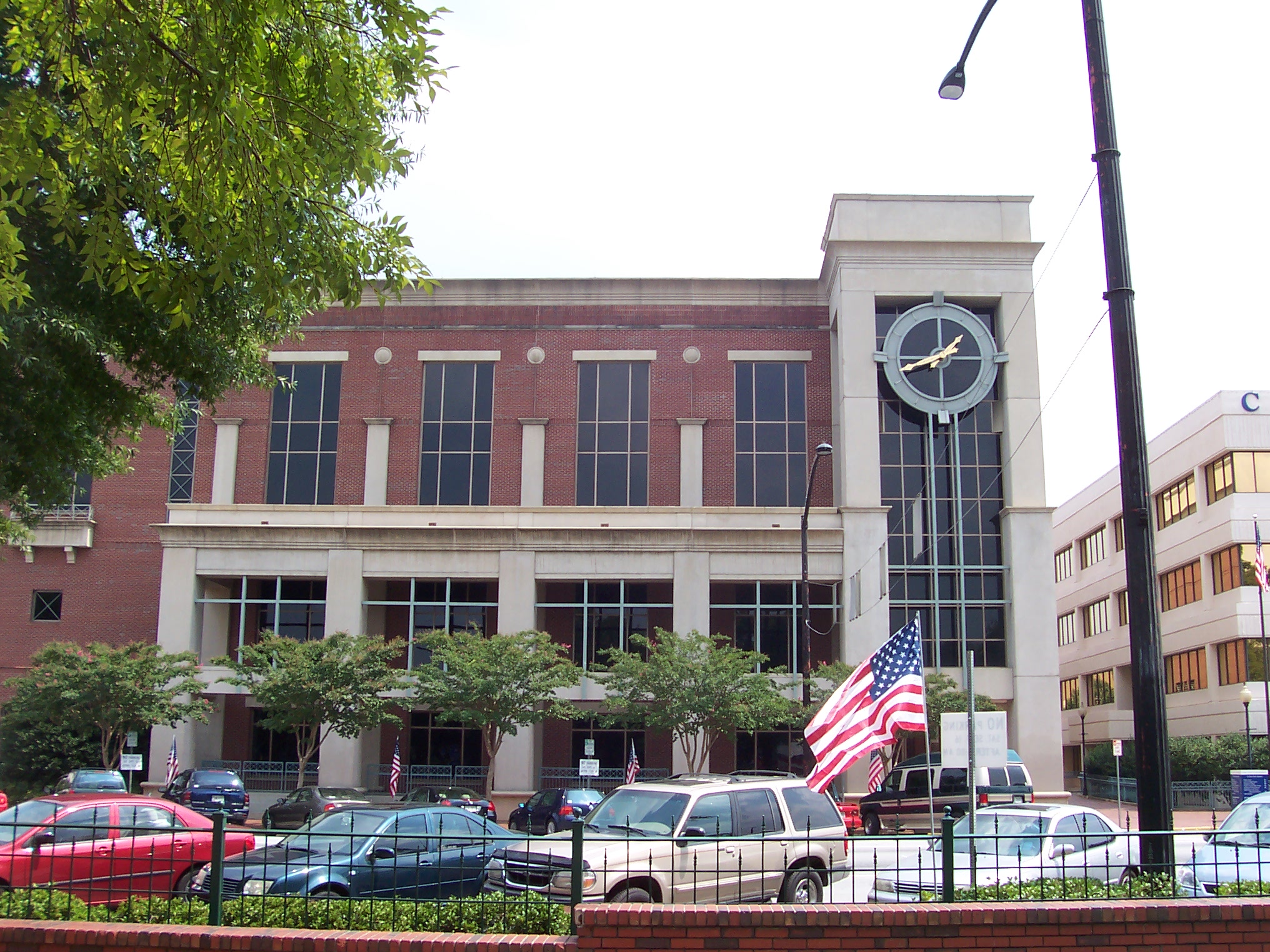
Courthouse, Cobb County, Georgia;
By HowardSF at English Wikipedia (Own work) [Public domain], via Wikimedia Commons

Smartphones. Tablets. Internet. Scanners. There is so much technology that enhances our ability to research and learn more about our ancestors. It took a recent trip to a county courthouse to remind me that old courthouse records can be just as important and meaningful to our research.

During a recent stay in Georgia, I took part of day to visit the Cobb County courthouse in Marietta, Georgia. It seemed the logical place to go since, for some reason, few Cobb County marriage or probate records had been digitized and made available for online research.

Getting Ready - The day before my visit, I did several things that really helped my efforts. First I called the Switzer Library in Marietta, Georgia, and spoke with a helpful person in their Georgia (Genealogy) Room. After I explained the type of information I was seeking, she reminded me, with a friendly voice, that the old records up to 1864 "were burned, you know, during the war" but that later records were all housed in the county courthouse. She also explained that extensive indices for these records were not available at the Library. This call helped me know that the courthouse was exactly where I needed to go for my research.

The second thing I did prior to my visit was to look through my genealogy software, Family Tree Maker, and make a list of those ancestors and some of the relatives from Cobb County for whom I wanted to locate a marriage record, a will, or a probate packet. My handwritten list included:

  • type of record needed
  • name/names of person/s involved
  • probable date of the record

Getting Set - I'm glad to took time to visit the Cobb County, Georgia government's web site, because the county has several different court areas including juvenile, criminal, and probate. I set my GPS for the probate court address, marked the parking garage on Google Maps, and took a picture of my parking spot number with my phone. (I wasn't about to not use my available technology.)

Go - My first top was the Cobb County Probate Office. While there were no public indices to the old probate records, a very helpful clerk in the office offered to look up those people on my list to see if probate records for any of them were housed in that office. From my list of six, only one had any probate records, my second great grandfather, Thomas D. Perkinson. Interestingly, none of the records were indexed under his name. Thomas had died intestate, so all of the records were indexed with the name of his wife Mary and a son William Perkinson, and the records dealt with their efforts to settle Thomas' estate.

As for the other five will or probate records I was seeking, the Probate Office clerk suggested that I might check surrounding counties for records. If my ancestor had owned property in another county, the will might have been probated there instead of in Cobb, their county of residence. Otherwise, the absence of any probate records generally suggests that my other ancestors did not actually own any property or items of value. The suggestion to look in other counties was an idea I need to persue in the future.


After a few minutes, the Court Minutes book was brought out for my use. The probate court did not require the use of white gloves on those old pages; I was simply asked to turn the pages carefully. The book containing the records I needed was huge, about 24 in x 15 in x 3 in. It just barely fit on the desk available for public use. Turning its pages was like going back through time. All entries were hand written. You could see when a new ordinary clerk took over through the change of handwriting. And the handwriting, so beautiful, very ornate on some of the pages, page after page filled with that now rarely seen Spencerian Script.


The index listed four pages of records for this estate: Temporary Letters of Administration, two papers for Permanent Letters of Administration, and records for the Leave to Sell Thomas' property. All four records were indexed under the name of "Perkerson", but the records themselves included both the name "Perkerson" and the correct name "Perkinson".

I was able to take pictures of all of the records with my smart phone then later transcribe them using Transcript, a wonderful freeware program by Jacob Boerema. By reading the transcriptions, I was able to construct a timeline and follow the probate process for the estate of Thomas D Perkinson.

Thomas D Perkinson died on 30 Sep 1875. In the opening of the October term of court, 7 Oct 1875, his widow Mary Putnam Perkinson and his oldest son, William Howard Perkinson, applied to the court to receive Permanent Letters of Administration in order to settle Thomas' estate. The record included that statement that Thomas had "left considerable estate" which needed to be handled. A further statement estimated the value of the estate to be $15,000. The Ordinary was on vacation, so the court gave only Temporary Letters of Administration. In addition, five men were named as appraisers of the estate, among whom were an H Putnam (who might have been Mary Putnam Perkinson's brother Henry) and an L Litchfield (who might have been the Lemuel Litchfield who was married to Thomas and Mary's daughter Nancey Ann Perkinson).

In the November 1875 term of court, Mary and William Howard appeared in court and swore that "to the best of their knowledge" Thomas had died without a will. The actual Permanent Letters of Administration were granted to Mary and son William Howard on 6 Dec 1875 during December court.

By February of 1876, the appraisers had apparently studied the land Thomas owned and had reported to the court; the document to this effect was not recorded in the minutes book. What was recorded was this description of the real estate owned by Thomas. It consisted of
"numerous lots of wild or unimproved land, scattered, in different counties through the state, a great many of said lands being of very little value, and will not pay for the expense of advertising and selling in the usual way [so] the Court being notified that it will be of interest of said estate, to sell these lands at private sale, it is therefore ordered, that [the administrators be] authorized to sell and convey the wild or unimproved lands at private or public sale as their judgment may dictate and to the best interest of said estate."
Basically, Mary and William were given permission to sell the lands any way and for any amount they could get in order that Thomas' estate be settled. How I wish the final return for Thomas' estate had been recorded in these records. It would have been interesting to learn exactly where the properties had been located and who purchased them. Regardless of the final outcome for the probate process, these Court Minutes records were a real treasure to find and read.

My next courthouse stop was at the county's License Office. Today this is where people apply for a marriage license, a weapon carry permit, or papers regarding residence status. It was an interesting and busy office. Fortunately for me, the License Office had a bound index to the marriage records stored there. According to the index, the only existing marriage record I was seeking was that of my Great Grandparents Albert Bell Vaughan, Jr. and Georgia Camp.


Again, I was presented with a large volume of records and was allowed to photograph the desired record. I even smiled when I saw, once again, the signature of H. M. Hammett, the Ordinary of Cobb County, the gentleman who had signed papers relating to settling the estate of Thomas D Perkinson six years prior to this marriage. I had known of their marriage date for a number of years, but there was something very special about actually holding that record book and seeing the official record for the beginning of their married life. It was another courthouse treasure to add to my files.

Marriage Record for Albert Bell Vaughan, Jr, and Georgia Camp

Lessons Learned:

  • When looking through old, handwritten documents such as these, it is not that unusual to find various spellings of an ancestor's name. These documents were generally written by others based on oral information given to them.
  • The contact I made with the city library and my use of the county government's web site helped my visit to go very smoothly. As the saying goes, prior preparation prevents poor performance.
  • I was surprised at the emotional impact of seeing these records. It is one thing to read information digitized online or recorded in a database; it can be something a little different to actually hold an original record written at a specific point in your ancestor's life.
  • I am now starting some lists in my Genealogy Bullet Journal of other Courthouse Treasures I want to search for in the future. I need to include looking for probate records of my Cobb County ancestory in some of the neighboring Georgia counties.
#bulletjournal #genealogybulletjournal #campgenealogy #georgiagenealogy #genealogyhardwaresoftware #lessonslearned #perkinsongenealogy #researchtips #thoseplacesthursday #vaughangenealogy

Update:  You may want to look at this You Tube video from Genealogy Magazine about Courthouse Research. It provides a quick overview presented with a light touch.  https://www.youtube.com/watch?v=DjxOkXDU2cY&feature=youtu.be.

Thursday, May 25, 2017

My Genealogy Bullet Journal, Month 5


"Winner" from pixabay
Winner from pixabay

Sometimes you just end up amazed at what a positive change something has caused. That's the way I feel about my genealogy bullet journal after five months. And here are three reasons why.

ACCOUNTABILITY: Virtually all of my genealogy research is done solo. By myself. At my own pace. When I decide to do it. The simple act of writing down one or two weekly genealogy to-dos has helped me be more accountable to myself. It is one thing to think I might try to look for a new record, check out the validity of a shaking leaf, or search for a death date. I've found that writing it on a weekly to-do list has made me much more likely to do it and to do it in a timely manner. Amidst travel plans, family visits, and life, I have that visual reminder of what I am trying to do. It is written right there in my bullet journal.

PLANNING: On page three of my bullet journal is a list of five genealogy related goals I hope to accomplish in 2017. I wrote about having goals in my Genealogy Bullet Journal, Day 1 post. Two of them had been ideas that I just hadn't gotten around to for several years. Once again, seeing something written in my bullet journal has reminded me that this really is something I feel is important to do.

One of my 2017 goals was to study some documents housed at the Calvin M. McClung Collection of the Knox County Public Library in Knoxville, Tennessee. I was especially interested in looking at the  Parham Papers, a collection of documents, records, and notes by genealogist Will E Parham that documented many families who had been part of East Tennessee's history. I particularly wanted to view those papers related to my husband's Bogle family ancestors. In my bullet journal I had already recorded information about the collection as well as the library's address and hours.

In April we were near the Knoxville area so I let this become my time to finally see the Bogle folder of the Parham Papers. Seeing available time was something I had discovered and mentioned in a previous Bullet Journal post and now was the time to see those Bogle papers. It was a worthwhile two hour visit. I saw much that confirmed what I had already learned on my own. I was able to have photocopies made of new information. I even enjoyed reading Mr. Parham's letters to genealogy clients quoting rates for his services, even requesting approval of a $2-$2.50 cost for a hotel room in Nashville if the client wanted him to conduct additional research at the state capital in the 1930s. Had I not listed a visit to the McClung Collection in my 2017 goals, I would probably still be planning to do it someday, later, eventually, one of these days.


PROGRESS: Another goal for 2017 was to finally compile a small scrapbook of the stories associated with some family heirlooms. My bullet journal has proven to be a good place to record my progress on this project. I started with a burst of activity back in February, taking a lot of photos and looking over previous blog posts to see what I wanted to include in the scrapbook. I actually started putting the scrapbook together during one of those periods when I needed a break from research. Before long I had completed 20 pages in my Family Treasures And Tales scrapbook. This much was completed in time to share with our children and grandchildren during recent visits.

The scrapbook is still a work in progress. Notes in my bullet journal help me keep up with these additional things that I want to include in the scrapbook. Now I when see an item related to family history, perhaps a quilt on a bed or a 100-year old wooden planer sitting on a bookcase shelf and realize that its story needs to be included in the scrapbook, I make a note in my journal. My mother's collection of souvenir spoons hangs on the wall in my dining room, and my notes remind me that I need to polish those spoons, take pictures, and write a short story about some of them.


So, for me, my Genealogy Bullet Journal continues to have a special role in my genealogy research. It has made a difference to be more accountable to myself and to actually carry out plans that had previously just been rolling around in my thoughts. My journal isn't fancy or elaborately decorated. It is minimal in design, but it has helped to encourage me and has enabled me to be a better researcher and family historian. That makes my Genealogy Bullet Journal a winner for me.

#bulletjournal #genealogybulletjournal #researchtips #sharestoriesandinformation #thoseplacesthursday

Thursday, February 2, 2017

My Genealogy Bullet Journal, Month 2

Public Domain Photo via Wikimedia Commons

Some say that doing something daily for 30 days is enough time and opportunity to establish a habit. After using my Genealogy Bullet Journal for the month of January, I can state that I have established a new habit. A habit that enhances the way I research. A habit I feel will stay with me into the future.

Last month I posted about starting my Genealogy Bullet Journal. Frankly I wasn't sure exactly how or even why I would use it, but I felt bullet journaling was a trend worth investigating. Here are some of the things I tried and learned through January's 31 days.
  • I experimented with several different weekly spreads, trying to find one that suited me. After all starting with a blank journal gives you the opportunity to try different things, different looks, add your touch. I've ended up settling on the basic spread shown in my first post. I found that amount and organization of space has been enough for what I wanted to note and record for any given day.

  • Yes, it is SO tempting to add color, stamps, stickers, you name it to a bullet journal. I confess, I picked up a set of planner stamps on sale at my local craft store. 
    • I like putting an ! or * or thumbs up to indicate success. They are a good balance for the frowny faces :( I draw when I've spent an afternoon or two looking, or searching, or reading and found nothing that advances my research, all that negative research that is a real part of genealogy. I still enjoy looking at photos of all those beautifully designed bujos (bullet journals) on Instagram and Pinterest, but my ministampers will probably be the extent of my bujo creativity. 
    • The list stamp has proven to be helpful. Just stamp it on a sticky note, list up to six places I plan to look for information about that person or event, and I'm ready to go. All research questions won't focus on using the same sources. My check list stamp encourages me to consider the wide variety of possible sources to use, some online, some at a library or in a book, something in my files that might warrant a closer look. 
  • Every once in a while, we stumble upon something that is some simple, yet so great. That is the way I feel about my 3F idea - First File Fifteen minutes. Having those seven task boxes across a page of my weekly spread kept me going. Besides seeing my document pile shrink, there was also that simple little kid joy in seeing all seven boxes marked as tasks completed for the week. By the end of January, I had actually looked at, read over, and filed about 3 inches of documents in my file basket, all relating to my Perkinson family tree. This filing time was a daily warm up to more serious research. Now, for February, I'm starting to dig through the stuff relating to my husband's Nelson family tree. And later, once that pile is cleared, I'll spend time looking through my files to see what needs to be placed elsewhere, clear out duplicates, determine new questions for which to seek an answer. Filing, like laundry, will be an ongoing task!
  • I am learning to use and rely on the Collections section of my bujo. First, as I filed, if I had a question or noticed something needing further research, I finally had a place to record it. On days when I wasn't sure exactly as to what I wanted or needed to research, I could turn to my Research Questions in the Collections section, choose a question I had previously recorded and I was good to go for several days.
    • Here is just one example. I had printed out a family group sheet on the William Huey Family that I had found on FamilySearch.org. It listed names, dates, children, their spouses for my 4th Great Grandfather's family but NO sources. My first research question was to try to verify the information on this printout along with a note as to the folder and item number where the printout was filed. I'm still working on this project, but I'm also finding a few sources for some of the information on the printout.
    • Learning more about the Hueys has lead me to add another collection section, one I'm calling my Treasure Chest. After spending parts of a week browsing through the Pennsylvania Archives on Ancestry.com, looking for anything about the Hueys, I added a note describing this resource in my Treasure Chest. I wrote "Pennsylvania" in large letters, then a paragraph to describe the types of information I found there - things like marriage records, rosters of militia, immigration information complete with a physical description of the immigrant and his/her family background. Even though I found only a few Huey facts, I know I want to remember this resources in the future when researching ancestors in 1650-1800 Pennsylvania, even if it is months from now that I jump back into some Pennsylvania area research.
  • Having the big picture of my yearly spread is helping me better plan for blog posts and research times. Now that we have some family trips, looking after grandchildren, and a few get-togethers listed, I can see times in which to plan or add on some research trips. 
  • My bujo isn't replacing my detailed research log. Instead it supplements my research. I add a few notes in my daily block noting the family, area, topic, or source I researched. Looking back over my diary entries for the month of January, I get a feel for what I did and can gain ideas as to other approaches or resources to use. I can also see that I've spent enough time, for now, on looking for the Hueys in early 1700s. It is about time to move on to another question. My actual research log will continue to be the private notes I add for an individual in Family Tree Maker.
Meanwhile, I've also started a personal bullet journal. It too has the 3F filing blocks which I'm using to get our household files in order and to look for any paperwork needed for filing our taxes for the year. I've also added daily check boxes for my walking / exercising. On the daily spread, there are notes about progress on some of those household projects we want need to address in 2017. There is also room for journaling my reflections on things I read or the Bible study in which I am involved. The yearly and monthly calendars contain lists of our family activities and various volunteer commitments. Another bujo as individual as its writer.

It looks like I'm hooked on bullet journaling. Where is my heart stamp when I need it?

#bulletjournal #genealogybulletjournal #genealogyresources #organizinginformation #researchgoals #researchtips
Monday, January 2, 2017

My Genealogy Bullet Journal, Day 1


Between Pinterest, Instagram, and Feedly, most of us have seen the explosion of people using bullet journals. Some track fitness. Some focus on gratitude, religious, or inspirational topics. Some are a type of To-Do List. And some focus on genealogy.

Through the month of December my husband and I used an old notebook to help us track all we wanted to accomplish during the time available between traveling to various family gatherings. We actually did everything on our lists and even had time to relax. That was enough to convince me to give bullet journaling a serious try in the new year.

What started my decision to use it for genealogy was watching Dear Myrtl's Google Hangout on What's Bullet Journaling? Her guest Tami Mize showed how her bullet journal was organized and suggested a variety of ways to use one. Then, Dear Myrtle had a series of blog posts detailing how she was setting up her bullet journal. Dear Myrtle even included a link to  a wonderful, easy to follow video by Ryder Carroll, the "father of bullet journaling". I was hooked. And yes, I even went so far as to set up a Pinterest board on Bullet Journal Basics as I was starting to get into it.

So here is where I am after Day 1.
  • I'm using a simple spiral journal given to me about 10 years ago by a former student. It had been sitting on my genealogy bookshelf, just waiting for the right moment to come along. Last week I started getting everything ready so I could begin using it January 1. But a great aspect of bullet journaling is that you don't have to wait for a new year to begin; you can start anytime you want to and for any reason.
  • As Ryder Carroll suggests, one of the first things I did in my bullet journal was to number the pages, all 160 of them.
  • Crafter and scrapbooker that I am, I decided to NOT let this become a craft project but just to try to maintain it as an organizational tool. I admit, I did find a roll of washi tape with the days of the week printed on it among my craft supplies. That roll is already being used in my bullet journal. And I tied some ribbon scraps to the spiral to be used as bookmarks. I'll admit, it is still tempting as I pass the entire aisle of my local craft store and gaze at the variety of papers, pens, stickers, etc. all designed for use in a planner or journal. I tell myself to just keep walking. Again, how ornate or minimalistic you make your journal is an individual choice.
  • I decided on the keys / graphic symbols to use in my journal. They are basically the ones Carroll shows in his video together with a few others I've used for years.
  • An index is a necessity for a bullet journal. I allowed a page and a half, probably should have allowed more, but I know I can always add an index entry for "Index Continues, p 100-104".
  • Instead of New Year's Resolutions, I chose to write some specific goals, calling it "2017, My Year to ..." I have five things listed, all things I had thought about, or started but laid aside, or else spent money on but not used sufficiently. Actually writing them has made me feel that accomplishing them is must more likely than when I had previously just thought about doing them.
  • I love, make that LOVE, the Future Log spread. I've already noted when various subscriptions and memberships expire, what events are scheduled for the year, and some specific deadlines I am setting for myself. Later, I'll add some personal things like trips, vacations with family, etc. This will help me more realistically allot time to various projects and goals. I've always been one to get the big picture first then develop the steps to get there so the Future Log fits the way I think.

  • The next two pages are for the Monthly Log. Each day is noted on a separate line. There is also room for me to list specific things I want to do for the month. Some people rave about the monthly log. Right now I'm ambivalent as to how much I will use this feature. Time will tell.
  • For my Daily Log, I settled on a two page spread, each page divided into four blocks. I use one block for each day of the week and block eight for things I want to accomplish or address this week. Across the top of one of the daily pages, I added a box to check daily for my 3F project. I'm trying to First spend Fifteen minutes Filing (the 3Fs) some of the stuff that gathers in my never empty file trays.  Each daily block will be for quick notes about what I researched that day, questions I want to check on (also listed in my Collection section of the journal), other genealogy related information for that day. Today's block includes the note "started writing Bullet Journal post!" After the first four weeks of January are covered in my Daily Log, I'll add a Monthly Log for February, then start another series of weekly spreads for Daily Logs and add February to the Index.

  • The last 30 pages of my book have been reserved for my Collections. I appreciate the versitality of the Collections section. It is MY collection, those miscellaneous things I want to keep up with, remember, check into. And when I use all these 30 pages, I'll just add another Index entry for each new collection page, selecting pages in another section toward the back of my bullet journal. My first collection page contained information about a library I plan to visit this year, things like address, phone numbers, reminder to set up an appointment specifying my research needs, and of course, the persons I will be researching. Back in the Index, I listed the name of the library and page on which I have the information. Last week I also started a page of Research Questions. In the middle of researching a relative, I realized the need to clarify something about another relative. I quickly added it to the Research Questions page then returned to my original research. Later I'll go back over this page and try to find answers to these questions. Another page in my Collections will be a list of Correspondence. Previously I have tended to add this as a note in Family Tree Maker but then to forget about it. Out of sight, out of mind. This way I can keep closer tabs as to when I ordered a record, e-mailed someone, etc. 

So there it is. My bullet journal. Part calendar. Part planner. Part diary. Part catch-all for things I need to remember. Part motivator. I can already see the value in reviewing my research and in having a specific place to record information in a simple format. Much as I feel I could not manage without my laptop, my smartphone, my genealogy software, Google Drive, the internet, and so much more technology, it is also satisfying to put a lovely journal to a constructive purpose.

And I plan to post in the future on tweaks I've made to my first bullet journal. It is just day two, and I already think I may highlight on the Daily Log the name of the family I'm researching. I might replace the ribbon bookmarks with sticky tabs from an office supply store. Here we go ...

What has been your experience with bullet journaling? I hope you will share some of your ideas.

#bulletjournal #genealogybulletjournal #organizinginformation