Showing posts with label Perkinson. Show all posts

Wednesday, July 17, 2019

Who Was Joshua Stevens and What Were He and Solomon Kemp Doing in My Files?


It all started as I was going through things in the attic, doing the "50 Year Purge", trying to get years of files, folders, and contents of forgotten boxes under control. While going through a folder with my father's name on it, I found several things I remembered my mother giving to me years ago, but then I find a surprise. There, in the folder, along with my dad's military papers and a few old newspaper clippings was an envelope marked in my handwriting "An old deed". Inside that envelope I found this brittle, stained sheet of paper, apparently a document to record the sale of land by Solomon Kemp to a Michael G..... in 1842.


Sale Receipt for Solomon Kemp, 1842

I also found a second, smaller envelope, this one labeled in my mother's writing, "Old deed with seal attached". When I carefully opened the envelope, this is what I found.


Deed to Georgia Land Lottery Draw for Joshua Stephens, 1832

With a quick glance, I realized that I was looking at pieces of an original deed or document relating to a draw from the 1832 Georgia Land Lottery. And I knew I needed to learn as much as I could about these documents and the people involved. And I needed to come up with a research plan for gathering information about these documents beyond the obvious reading of the words on those pieces of paper.

In years past, someone had tried to tape together the fragile pieces of the Stevens document. Today, the fragments are almost too brittle to touch, so I tried to handle them with as gently as possible. After photographing the two documents, I felt the next step was to transcribe them. Having the transcriptions gave me sheets of paper that were much easier to read, papers I didn't need to be concerned about getting stains, spills, or anything else to cause further damage to the original documents.

So, here I am about 24 hours later, actually starting to learn a little about Joshua Stevens. Here is what I have come across thus far.
  • Step one, check in my Family Tree Maker software for a Joshua Stevens. I did not have that exact name among ancestors or relatives. I have one Stevens male, no given name, who married into my mother's side of the family in the late 1770s according to the Massachusetts Town and Vital Records found on Ancestry.com, but I doubted if he would have been part of the 1832 Georgia Land Lottery. Other Stevens family members were from a marriage into my father's side of the family in 1899, so I am ruling out an established Stevens connection for the present time.
  • I've decided to start a separate tree in Family Tree Maker for Joshua Stevens. This way whenever I come across anything noteworthy, I have a place to record it. 
    • My first entry, beyond his name, was to record the Property fact that he drew Lot 946 in the Fifteenth District of the Second Section of Cherokee County, Georgia. 
    • Next I added that at the time of the draw, he was a resident of Madison County, Georgia.  
  • Both my family and my husband's had members who had been involved in the Georgia Land Lottery of 1832. My first research was to look at James F Smith's fabulous book, The Cherokee Land Lottery, Containing a Numerical List of the Names of the Fortunate Drawers in Said Lottery, With an Engraved Map of Each District. This treasure is available to view through both HathiTrust and The Internet Archive or abstracted on Ancestry.com. 
    • Imagine my surprise when I learned there was NO map for the Fifteenth District, Second Section of the drawing, NO list in number of draw order for the lottery winners! This was due to the fact that this district, along with some others, was considered to be a "Gold District". No gold was promised on the land, just the feeling that there "might" be gold there. Information for lottery winners for Gold Districts turned out to be in another book, one I haven't been able to find available online.
    • Thanks to www.worldcat.org I've found that copies of Alphabetical Index to Georgia's 1832 Gold Lottery were available at several libraries around metro Atlanta, so heading to one of them and finding the book is on my To-Do List on a future trip to Georgia.
  • I located a Joshua Stephens living in Madison County, Georgia, in the 1830 census and also in the 1820 Madison County census. No success, however, in locating a Joshua Stephens anywhere in Georgia in 1840 ... yet
  • The Georgia Virtual Vault presents a number of digitized resources, the originals of which are housed at the Georgia Archives. One resource is their database of "Georgia Colonial and Headright Plan Index, 1735-1866". If Joshua Stephens was in Madison County Georgia in the early 1800s, there was a good chance that he had received land as a settler moving into the area.  Through this database, I learned that Joshua Stephens had received several grants totalling over 700 acres in Madison County so he was already an established land holder at the time of the Cherokee Land Lottery.
  • Next stop was FamilySearch.org where I looked through their collection of "Georgia, Headright and Bounty Documents, 1783-1909". This time I had the actual digitized documents to read including:
    • a survey request to lay off 30 acres for Joshua in Oglethorpe County, Georgia, in 1797 
    • Land Warrant #21 that gave Joshua 300 acres in Madison County, Georgia, in 1813 and
    • Land Warrant #174 that gave Joshua 450 acres in Madison County, Georgia, in 1826
  • My next research steps will be to find out what happened to Joshua Stephens after 1832. This means checking resources such as
    • FindAGrave, BillionGraves, WikiTree to find a possible death date
    • Wills and Probate records on Ancestry.com and FamilySearch.org to perhaps learn what happened to his land after his death
    • Fold3.com to see if Joshua had any military service that might have been the catalyst for acquiring his various land grants
    • Look for website, etc. where I can locate lot 946 on a present day map. This might help me have a clue as to who may have lived there.
Now for my Georgia To-Do List
  • Visit a metro Atlanta library, get a copy of Alphabetical Index to Georgia's 1832 Gold Lottery, and learn more about Joshua's fortunate draw.
  • Check in Cherokee County Georgia to learn who later bought the land from Joshua Stephens and try to trace the land's ownership into the Perkinson family.
  • After I finally figure out why I even have these things, I want to contact county or state archives to see if an Archive or local history center might be a more fitting home for this interesting old document, especially as I am not aware on any Cherokee Lottery Land still owned by our Perkinson family.
As for the 1842 document signed by Solomon Kemp, that will have to wait for another research spurt. Looks like I have enough to keep me busy, out of trouble (and the attic), and even writing a few more blog posts for quite a while.

Monday, June 10, 2019

It Never Hurts to Go Looking : Taking Time to Visit Enon


Enon Cemetery, Woodstock, Georgia, 4 June 2019
personal photograph


It was one of those perfect days for a cemetery visit, not yet Georgia summer hot, cloudy but not rainy, and an uncrowded midweek morning. I had visited several times over the past 20 years to take pictures, but this time I had another purpose. I knew that my relatives were buried in a family plot, but I wanted to record exactly WHO was WHERE and to be certain that I had a picture of each marker in the plot. It was time for me to make a map of the family plot.

Although it had been close to 10 years since my last visit to Enon, it was easy to locate the Perkinson family plot. It is the plot with the tall obelisk near its center.


Perkinson Monument
personal photo


Armed with pen and paper and my cell phone camera, I arrived at Enon Cemetery midmorning and was pleased to see that paved parking places were now available just next to the family plot. I decided to work left to right, front to back, to document all of those buried in the plot. 


Rough sketch of the Perkinson family plot


My quick sketch of the plot included a number and the name of the one buried there. It was not an architectural or even scaled drawing by any means, but it is enough for me to see who is buried where and to consider some relationships. The numbers on the sketch made it easy to locate the corresponding photo in my phone's camera roll for that day. The arrow pointing right at grave 24 refers to three more graves in that row, graves which I documented on another page. Later I plan to upload any new photos to BillionGraves.com so that all of the burials in the plot will be recorded in their database.


As I walked around the plot and made notes, I came across this section which I do not remember ever noticing before. It took looking at all three relatively recent markers to see the family connection among the unfamiliar surnames. And the box of artificial flowers here and on a few other graves was a touch I had not seen often at Enon. It made me wonder if there had recently been a Decoration Day at Enon. Decoration Day, a long standing tradition in the rural south, is a time for families to gather at the burial place of ancestors, clean the cemetery of weeds, leaves, etc., and perhaps leave flowers in memory of loved ones. DigitalHeritage.org has an interesting article about this observance.

Finally, once home, as I was writing the detailed list of the burials, it was interesting to determine who was the first one to be buried in the plot at Enon Cemetery. The first family member buried in the plot was six month old Willie Perkinson, a younger brother of my grandfather, who was buried at Enon in 1883. In 1894, Walter Dean, a grandson of my second great grandparents, was buried there at the age of four months. Then followed the interments of various Perkinson and Dean family members and relatives up to as recently as 2017. Perhaps I need to start referring to this plot as the Perkinson-Dean Family Plot in recognition of the blending of the two families.

Lessons Learned:
  • Taking the time to look at all the graves and markers made me want to be certain of the family relationship of each person buried there. Now that I'm home, I am listing each person buried in the family plot, their birth and death dates, relationship to anyone buried in the family plot, and a notation for any direct ancestor. Having this information along with a neater version of the plot map will help me. I plan to add the redrawn plot map, the relationship list, and labeled thumbnail photos to my Perkinson Family file folder. Plus, a copy will go to my brother. As the old saying goes, it's hard to know the players without a program.
  • There were a few recent burials in the family plot for whom I need to document their relationships in my genealogy software.
  • It was a time to pause and reflect when I saw the graves of six young children buried among the 34 family graves. I wondered if these young deaths corresponded to pandemics sweeping the area or if they were caused by genetic problems or undiagnosed health issues.
  • The variety of last names - Barnes, Dean, Drinkard, Felton, McAfee, Perkinson - give this plot the feeling of the small town where most of those buried had lived at some point in their life.
  • As I explore some of the relationships, I am reminded once again that there may be something new to learn when we revisit a genealogy resource. Documents, photos, even grave markers can continue to provide additional information when we take another look; they might even lead to new questions to research.
  • My decision to include a visit to Enon came as I was planning to visit the Woodstock Public Library, just across the street. My purpose for going to the library related to my quest to find an elusive marriage verification I needed for my DAR membership application. Still no luck finding any marriage information, even in among obituaries on microfilm of old newspapers, but the trip to Enon was a worthwhile endeavor. Combining research missions helped me have success in one area even if the other task was less fruitful.

Thursday, August 24, 2017

It Never Hurts To Go Looking: Courthouse Treasures


Courthouse, Cobb County, Georgia;
By HowardSF at English Wikipedia (Own work) [Public domain], via Wikimedia Commons

Smartphones. Tablets. Internet. Scanners. There is so much technology that enhances our ability to research and learn more about our ancestors. It took a recent trip to a county courthouse to remind me that old courthouse records can be just as important and meaningful to our research.

During a recent stay in Georgia, I took part of day to visit the Cobb County courthouse in Marietta, Georgia. It seemed the logical place to go since, for some reason, few Cobb County marriage or probate records had been digitized and made available for online research.

Getting Ready - The day before my visit, I did several things that really helped my efforts. First I called the Switzer Library in Marietta, Georgia, and spoke with a helpful person in their Georgia (Genealogy) Room. After I explained the type of information I was seeking, she reminded me, with a friendly voice, that the old records up to 1864 "were burned, you know, during the war" but that later records were all housed in the county courthouse. She also explained that extensive indices for these records were not available at the Library. This call helped me know that the courthouse was exactly where I needed to go for my research.

The second thing I did prior to my visit was to look through my genealogy software, Family Tree Maker, and make a list of those ancestors and some of the relatives from Cobb County for whom I wanted to locate a marriage record, a will, or a probate packet. My handwritten list included:

  • type of record needed
  • name/names of person/s involved
  • probable date of the record

Getting Set - I'm glad to took time to visit the Cobb County, Georgia government's web site, because the county has several different court areas including juvenile, criminal, and probate. I set my GPS for the probate court address, marked the parking garage on Google Maps, and took a picture of my parking spot number with my phone. (I wasn't about to not use my available technology.)

Go - My first top was the Cobb County Probate Office. While there were no public indices to the old probate records, a very helpful clerk in the office offered to look up those people on my list to see if probate records for any of them were housed in that office. From my list of six, only one had any probate records, my second great grandfather, Thomas D. Perkinson. Interestingly, none of the records were indexed under his name. Thomas had died intestate, so all of the records were indexed with the name of his wife Mary and a son William Perkinson, and the records dealt with their efforts to settle Thomas' estate.

As for the other five will or probate records I was seeking, the Probate Office clerk suggested that I might check surrounding counties for records. If my ancestor had owned property in another county, the will might have been probated there instead of in Cobb, their county of residence. Otherwise, the absence of any probate records generally suggests that my other ancestors did not actually own any property or items of value. The suggestion to look in other counties was an idea I need to persue in the future.


After a few minutes, the Court Minutes book was brought out for my use. The probate court did not require the use of white gloves on those old pages; I was simply asked to turn the pages carefully. The book containing the records I needed was huge, about 24 in x 15 in x 3 in. It just barely fit on the desk available for public use. Turning its pages was like going back through time. All entries were hand written. You could see when a new ordinary clerk took over through the change of handwriting. And the handwriting, so beautiful, very ornate on some of the pages, page after page filled with that now rarely seen Spencerian Script.


The index listed four pages of records for this estate: Temporary Letters of Administration, two papers for Permanent Letters of Administration, and records for the Leave to Sell Thomas' property. All four records were indexed under the name of "Perkerson", but the records themselves included both the name "Perkerson" and the correct name "Perkinson".

I was able to take pictures of all of the records with my smart phone then later transcribe them using Transcript, a wonderful freeware program by Jacob Boerema. By reading the transcriptions, I was able to construct a timeline and follow the probate process for the estate of Thomas D Perkinson.

Thomas D Perkinson died on 30 Sep 1875. In the opening of the October term of court, 7 Oct 1875, his widow Mary Putnam Perkinson and his oldest son, William Howard Perkinson, applied to the court to receive Permanent Letters of Administration in order to settle Thomas' estate. The record included that statement that Thomas had "left considerable estate" which needed to be handled. A further statement estimated the value of the estate to be $15,000. The Ordinary was on vacation, so the court gave only Temporary Letters of Administration. In addition, five men were named as appraisers of the estate, among whom were an H Putnam (who might have been Mary Putnam Perkinson's brother Henry) and an L Litchfield (who might have been the Lemuel Litchfield who was married to Thomas and Mary's daughter Nancey Ann Perkinson).

In the November 1875 term of court, Mary and William Howard appeared in court and swore that "to the best of their knowledge" Thomas had died without a will. The actual Permanent Letters of Administration were granted to Mary and son William Howard on 6 Dec 1875 during December court.

By February of 1876, the appraisers had apparently studied the land Thomas owned and had reported to the court; the document to this effect was not recorded in the minutes book. What was recorded was this description of the real estate owned by Thomas. It consisted of
"numerous lots of wild or unimproved land, scattered, in different counties through the state, a great many of said lands being of very little value, and will not pay for the expense of advertising and selling in the usual way [so] the Court being notified that it will be of interest of said estate, to sell these lands at private sale, it is therefore ordered, that [the administrators be] authorized to sell and convey the wild or unimproved lands at private or public sale as their judgment may dictate and to the best interest of said estate."
Basically, Mary and William were given permission to sell the lands any way and for any amount they could get in order that Thomas' estate be settled. How I wish the final return for Thomas' estate had been recorded in these records. It would have been interesting to learn exactly where the properties had been located and who purchased them. Regardless of the final outcome for the probate process, these Court Minutes records were a real treasure to find and read.

My next courthouse stop was at the county's License Office. Today this is where people apply for a marriage license, a weapon carry permit, or papers regarding residence status. It was an interesting and busy office. Fortunately for me, the License Office had a bound index to the marriage records stored there. According to the index, the only existing marriage record I was seeking was that of my Great Grandparents Albert Bell Vaughan, Jr. and Georgia Camp.


Again, I was presented with a large volume of records and was allowed to photograph the desired record. I even smiled when I saw, once again, the signature of H. M. Hammett, the Ordinary of Cobb County, the gentleman who had signed papers relating to settling the estate of Thomas D Perkinson six years prior to this marriage. I had known of their marriage date for a number of years, but there was something very special about actually holding that record book and seeing the official record for the beginning of their married life. It was another courthouse treasure to add to my files.

Marriage Record for Albert Bell Vaughan, Jr, and Georgia Camp

Lessons Learned:

  • When looking through old, handwritten documents such as these, it is not that unusual to find various spellings of an ancestor's name. These documents were generally written by others based on oral information given to them.
  • The contact I made with the city library and my use of the county government's web site helped my visit to go very smoothly. As the saying goes, prior preparation prevents poor performance.
  • I was surprised at the emotional impact of seeing these records. It is one thing to read information digitized online or recorded in a database; it can be something a little different to actually hold an original record written at a specific point in your ancestor's life.
  • I am now starting some lists in my Genealogy Bullet Journal of other Courthouse Treasures I want to search for in the future. I need to include looking for probate records of my Cobb County ancestory in some of the neighboring Georgia counties.
#bulletjournal #genealogybulletjournal #campgenealogy #georgiagenealogy #genealogyhardwaresoftware #lessonslearned #perkinsongenealogy #researchtips #thoseplacesthursday #vaughangenealogy

Update:  You may want to look at this You Tube video from Genealogy Magazine about Courthouse Research. It provides a quick overview presented with a light touch.  https://www.youtube.com/watch?v=DjxOkXDU2cY&feature=youtu.be.

Saturday, April 22, 2017

Amazing What You Find When You Do a Little Spring Cleaning!

Spring Cleaning in the Vondelpark; source Wikimedia Commons.


Like so many, I have been anxiously awaiting the upcoming release of Family Tree Maker 2017. Having been a Beta tester for several library software products and revisions, I know that it can take time for all aspects of new or revised software to work consistently and in the intended manner so I don't mind waiting until FTM 2017 is 100% (or at least 99%) ready to go before my copy is ready to download.

I agree with Russ Worthington that the waiting period is a great time to do some neglected database clean-up. His post on 14 April 2017 presented a number of areas we can look into and steps we could each do to improve the quality of our database before we tried to sync it with an Ancestry tree. If you use Family Tree Maker, his post is definitely worth reading. A clean-up like Russ suggests is what I've been doing the last two weeks, and each day I am amazed at what I find in my personal clean-up.

My first round of clean-up involved looked at FTM sources that were not attached to anyone in my FTM tree. Probably 95% were for a source which, upon closer reading, turned out to not have information related to any one in my tree. These had come about because I have gotten into the habit of creating a new source when I find a record or other information that seemed, at first glance, to belong to someone in my family tree. Then, as I read the entire record or document, it was clear that the record involved someone who was not connected to my tree. Some of these sources remained like dead leaves on my tree as I tried to see if the information applied to someone else in the family; some remained because I just forgot to delete the source at the time. Now, after reading a lot of source records and following the web link in the citation, I was able to delete all that didn't belong in my tree. The great part was finding those few sources that did belong but somehow I had not actually connected them to the specific person. Who knows why, the phone rang, time to cook dinner, my phone buzzed that it was time to leave for an appointment. But now, all those previously unattached sources are either attached to someone or else have been deleted. I also have a new resolve to study a document more thoroughly before I consider it as a source for my tree, saving creating a source citation for when I know the source actually provides information about someone in my family tree.

Next I turned to looking at people in my database who had no source attached to them. Again, I was chagrined to realize that I had about 40 names attached to my family tree with no supporting documentation. Just a name, and that was all.

For example, in trying to find documentation (beyond personal knowledge) for the husband of a second cousin, Alice Northcutt Dean Felton. I stumbled upon a treasure trove of family information in Alice's obituary.(1) I had documentation of her death through an e-mail I had received, but this obituary found online from a small, local newspaper provided information about her husband, children, and something I had never heard before, that Alice had polio as a child. This one fact added another dimension to her rich, full, active life.

Another just-a-name-cousin became more real to me just be googling his name. I found information about his college years at Davidson College, an address for him from the 1960s through an alumni directory, and a record of his marriage to the previously named Joan xxx (my method for recording an unknown part of a name). The college information supported what I already knew about this first cousin once removed and where he had lived for many years, but now I had something besides a family directory from the 1970s that I had never bothered to cite as a source for him.

Other names without a source turned out to be very removed from my family tree. That included people people like George Glasscock, the brother-in-law of an 8th Great Uncle, and living in the 1600s. Looking at the information about my 8th Great Uncle, I could not find any connection to George (beyond that of being the brother of his wife), so George was among the names I decided to just delete from my family tree.

Then there are people like William Good, the husband of Sarah Solart (about whom I will be posting later). All I can find are the numerous statements in books that refer to William as the husband of Sarah, nothing more. I had early on added him as her spouse but never sourced it, hoping to easily find a record of their marriage. After several months, I still have found nothing more than William Good's name, but at least I realized that I needed to document that it was recorded in several books. After all his life was a large part of Sarah Solart's story.

The real thrill came as I tried to find a source for Weldon Perkinson, a 4 Great Uncle, the son of my 4 Great Grandfather David Perkinson. I had found sources to verify that David had a son William and a daughter Phoebe/Phebe, just no source to connect Weldon beyond having seen his name written somewhere, some time. There were a number of online trees that listed Weldon as the son of David, few with birth or death dates only Union County, South Carolina as his place of death, I knew I had to approach this from a different angle. David Perkinson's death was listed in many online trees as occurring about 1807 in Union County, South Carolina, so I spent an hour looking at unindexed probate records for Union County on FamilySearch.(2) Finally I find a link between David and Weldon. David had died intestate, so his son William was appointed by the Union County court as administrator of his father's estate on 17 Aug 1807. Pages later in the packet, the final payments from the estate were made to the Martha Perkinson (presumably a daughter), Weldon (presumably a son), Phoebe Perkinson Bevis, Polly Perkinson Dickens (presumably a daughter) and Elizabeth Perkinson (presumably a daughter), the amounts to each person being essentially the same amount as is frequently the case with children in an estate. This certainly started chipping away at a brick wall.

Lessons learned: All in all, my Spring cleaning has kept me busy while I wait for the actual release of Family Tree Maker 2017. During this time, I was able to find sources for several relatives, possibly poke a few holes in a Perkinson brick wall, and locate helpful information using online obituary and college sites. Plus I removed a few people about whom I found nothing. It also became clear that I need to tweek exactly when I create a source and attack it to an individual. Maybe I need to do Spring cleaning a little more frequently than every four or five years.

#deangenealogy #familytreemaker #genealogyresources #lessonslearned #perkinsongenealogy

(1) "FELTON, Alice Dean", Tribune Ledger News, Canton, GA, 24 Jan, 2017; http://www.tribuneledgernews.com.
(2) South Carolina, Probate Records and Loose Papers, 1732-1964, Union, Probate Court, Probate records 1777-1961, Box 5, package 24, estate of David Parkinson/Perkinson; accessed www.familysearch.org.

Sunday, December 4, 2016

Perkinson Family Christmas, 1926


It is just a old, blurry, slightly faded photo of the Perkinson family gathered on the front porch of the family home in Woodstock, Georgia ninety years ago. But this was the one, the picture that first drew me into wanting to learn more about my family history.

Looking at the picture. I see how much I have learned about many of these relatives. Some of my research has become the source of some of my posts over the years. I added numbers by some of these relatives so you can put a face with a name in my posts about ...
  1. Mary Louise Perkinson, the subject of this tribute
  2. Oscar Dean Perkinson, Jr, whose story lead me learn more about the Civilian Conservation Corps and gave me a chance to share some old photos
  3. Leila Perkinson Stevens and the story of her wedding
  4. Oscar Dean Perkinson, Sr, local politician, accidental participant in an Inaugural Parade, and warehouse manager as well as my grandfather
  5. Louie Dean Stevens whose college courtship days were interesting to follow
  6. Ernest Vaughn Perkinson whose World War I draft registration lead me to learn about an unexpected occupation
  7. Paul Perkinson and how he read of his death in the newspaper
  8. Jesse Dean Perkinson, a noted researcher into the uses of atomic energy

Finally, looking at this picture also reminds me there are still more stories to research further. Stories like that of the family matriarch, my Great Grandmother, Louela Dean Perkinson, seated in the middle of the photo.  Widowed at 40 with at least five children still living at home, by necessity becoming involved in her late husband's business affairs. Definitely a story for another day. 

Interesting how one old photograph continues to draw me closer to my ancestors and relatives.

Sunday, September 4, 2016

The Slave Name Roll Project*: Estate of William Perkinson, Cherokee County, Georgia


"Power of Words" by Antonio Litterio,
via Wikimedia, org

Among the will and probate records for William Perkinson (1784-1865) of Cherokee County, Georgia, there were several indications that William had owned slaves.(1) In the appraisal of his estate, recorded 1 Mar 1866, the first four listings were of his four slaves:

  • Elias, a negro man
  • Ben, a negro man
  • Warren, a negro man
  • Daniel, a negro man

Additional records indicated that two of these slaves had been hired out at various times of the probate process and thus provided additional income which was included in the assets of William Perkinson's total estate. 
  • negro boy Elins, hired for 9 months to Stephen Terry
  • negro man Ben, hired for 9 months to Stephen Terry
  • negro man Ben, hired for 9 months to T D Perkinson
Among the sale records of Perkinson's estate, there was no indication as to what had happened to the four previously mentioned slaves. By the final return for the estate in June of 1866, the Civil War had ended and all slaves had been freed. This suggests that Elias, Ben, Warren, and Daniel may have remained in Cherokee County, Georgia.

Among the Will and Probate Records for Cherokee County was a list of Apprenticeship Indentures, 1866-1904. Virtually all of the 1866 entries were for freed negro boys and girls, indenturing them to an individual until each turned 18. During those intervening years, they were to be cared for, taught a trade, then released from their indenture. These young people where no longer slaves, but I plan to list their names, ages, and person to whom indentured in a future post.

Blogger Schalene Dagutis, through her blog Tangled Roots and Trees, developed the Slave Name Roll Project in 2015. This project is a means for listing the names of slaves as individual names are located through our research of wills, probate records, and property records. It gives us the opportunity to provide information so that present day descendants can make a connection to their enslaved ancestors.

(1) Georgia, Wills and Probate Records, 1742-1992, Cherokee County, Inventories and Appraisements, 1854-1924, p 341, William Perkinson Estate; accessed on www.ancestry.com.
(2) Georgia, Wills and Probate Records, 1742-1992, Cherokee County, Sales Bills, Vol B, 1855-1929, p 214, William Perkinson; accessed on www.ancestry.com.

Monday, July 27, 2015

Have You Heard the News* About Oscar Dean Perkinson?

It turned out that my Great Grandfather William Howard Perkinson wasn't the only family member who had been active in politics. Thanks to my newspaper research, I learned that his son, my Grandfather Oscar Dean Perkinson, was also involved in local government.

Articles in The [Atlanta] Constitution documented my Grandfather's election to the Woodstock [Georgia] City Council in 1903, 1913, and 1914. He was also elected Mayor of Woodstock in 1916, as related in this brief article. It was interesting to see the names of those elected to the Woodstock City Council in 1916. Almost everyone listed was part of the extended Perkinson family or a close family friend. So much for life in a small town.


The [Atlanta] Constitution, 5 Jan 1916, accessed through www.ancestry.com

Finding these articles about local politics helps me understand why my Grandfather probably decided to attend the inauguration of Woodrow Wilson in 1913. That event turned out to be yet another unexpected story!

* Have You Heard the News is a series of posts about family information gleaned from copies of Atlanta newspapers available through www.fold3.com, www.ancestry.com, and the Digital Archives of Georgia.

Tuesday, June 23, 2015

Have You Heard the News* About Paul Perkinson


It seems that my Great Uncle Paul Perkinson shared something in common with humorist and writer Mark Twain. Each had to deal with a report of his death.

Imagine sitting down with your first cup of coffee, opening the morning newspaper, and reading this article about yourself. Definitely would call for a second cup!


The [Atlanta] Constitution, 4 Feb 1903

And then, three days later, this article appeared in The Constitution.


The [Atlanta] Constitution, 7 Feb 1903

Had it been a college prank? Was it a serious mix-up by a Macon mortuary? The truth never came out in fact or through family lore. After that notice published in 1903, Paul Benson Perkinson actually lived another 40 years until his death in September of 1943.

* Have You Heard the News is a series of posts about family information gleaned from copies of Atlanta newspapers available through www.fold3.com, www.ancestry.com, and the Digital Archives of Georgia.

Tuesday, June 16, 2015

Tuesday's Tips : Have You Heard the News* About William Howard Perkinson?


photo from The [Atlanta] Constitution, 15 March 1891

Sometimes we spend our research time trying to find everything possible about a specific ancestor by using a wide variety of resources. Sometimes, however, it pays to mine a specific resource to see what information you can find concerning any relative or ancestor. By mining, I mean searching within a specific resource for any information related to a specific surname, in my case I searched for "Perkinson" in newspapers. The mining approach has enabled me to find some interesting information about a number of Georgia relatives, thanks to issues of Atlanta newspapers available through fold3.com, Ancestry.com, the Digital Library of Georgia, and the Library of Congress Chronicling America collection of historical newspapers.

I was actually skimming through the 15 March 1891 issue of The [Atlanta] Constitution for information about another relative when seeing the drawing above made me stop and start reading the article on the page. After all, it isn't every day you find a picture of your Great Grandfather in an old newspaper.

The article was part of a multi-page section about Cherokee County, Georgia.(1) The articles highlighted the history, civic leaders, and industries of the towns of Canton and Woodstock, towns that were home to a lot of Perkinsons, and "a section possessing as many God-given attributes as any that distinguish the South".

Captain W H Perkinson, as he was called in the article, was listed among the leading merchants of the town of Woodstock. The article also made reference to his large brick home, built at a cost of $4000, one of the few brick homes in the town. 

Another part of the article provided more information about his business interests. The Alliance Company was founded after the fall of the firm of  Perkinson & Benson, a prior business owned by William Howard Perkinson and a Benson relative. My Great Grandfather was able to gather 100 area farmers together to form this new Alliance Company with over $100,000 in capital, quite a sum for 1891. The company, at the time of the article, had already purchased a barn and converted it into a cotton seed oil mill and a fertilizer factory.

An older issue of The Constitution provided a short article describing a fire in Woodstock that destroyed several buildings in the business area in 1886.(2) A storehouse and a frame building were both destroyed, including about $1000 of inventory stored in the buildings for businesses owned by my Great Grandfather. Fortunately, his primary inventory in another building was covered by his insurance.

In the spring of 1891, William Howard Perkinson was a delegate to a World's Fair assembly held in Atlanta.(3) The purpose of this assembly was to decide upon an exhibit for the state of Georgia to build for the 1893 Columbian Exposition to be held in Chicago. The group meeting together consisted of, in the words of Gov. Northern, "the best men in the state". The next year his wife, Louella Dean Perkinson, was named by the governor to serve on the Women's Work Committee in conjunction with planning for the women's exhibit at the Exposition.(4)

William Howard Perkinson, in addition to his business interests, was also extensively involved in farming. For a number of years, he served as a Vice President of the Georgia Agricultural Association, representing the ninth district.(5) 

Great Grandfather Perkinson was involved with the temperance movement. An article about the 1865 state convention of the International Organization of Good Templars related that W H Perkinson had been elected in its slate of officers for the next year.(6) He was also an active member of the Baptist Church, serving in 1883 as the first president of the Sunday School Association in the area.(7)

Capt Perkinson was also active politically in both state and congressional conventions.  In the 1880s, he was active in the Democratic Party, serving as the Cherokee County party chairman. He was also selected to be a representative to the 1882 state congressional convention of the Democratic Party.(8) However, by 1892, he had become involved in a third party movement which nominated him to run for the US Senate.(9) It was apparently an unsuccessful run as I unable to find anything further about the campaign or the ensuing election.

This mining approach to area newspapers yielded a wide variety of family information. Gathering this information involved looking at over 150 newspaper articles. But it was worth it to weed through society announcements, articles about unrelated Perkinsons, and numerous legal notices to gain a richer picture of William Howard Perkinson. Through the articles, I learned more about him as a person, his business interests, and his involvement in local politics. Besides some isolated facts that I recorded in Family Tree Maker, I also discovered other nuggets of Perkinson information that I will be sharing in future posts. 

Which family name shall I mine next?

* Have You Heard the News is a series of posts about family information gleaned from copies of Atlanta newspapers available through www.fold3.com, www.ancestry.com, the Digital Archives of Georgia, and the Library of Congress Chronicling America collection of historical newspapers.

(1) Blackworth, B M, "Cherokee County, the Heart of a Great Agricultural Section", The Constitution, Atlanta, 15 March 1891, p 4-5; accessed through www.fold3.com, content source Allen County Public Library.
(2) "Fire in Woodstock", The Constitution, Atlanta, 30 Dec 1886, p 2; accessed through www.fold3.com, content source Allen County Public Library.
(3) "For the World's Fair", The Constitution, Atlanta, 5 May 1891, p 7; accessed through www.fold3.com, content source Allen County Public Library.
(4) "The World's Fair", The Constitution, Atlanta, 22 Apr 1892, p 7; accessed through www.fold3.com, content source Allen County Public Library.
(5) "The Georgia Farmers, The Weekly Constitution, Atlanta, 19 Aug 1884, p 9; accessed through Digital Library of Georgia; content source Atlanta Historical Newspapers Collection.
(6) "Grand Lodge, I.O.G.T.", Sunny South, Atlanta, 16 Oct 1875, p 6; accessed through Digital Library of Georgia; content source Atlanta Historical Newspapers Collection.
(7) "The Sunday School Association", The Atlanta Constitution, Atlanta, 10 May 1883; accessed through www.ancestry.com.
(8) "The Popular Vote", The Constitution, Atlanta, 6 Jul 1882, p 1; accessed through www.fold3.com, content source Allen County Public Library.
(9) "Third Party Convention", The Constitution, Atlanta, 31 May 1892, p 1; accessed through www.fold3.com, content source Allen County Public Library.

Wednesday, June 10, 2015

Workday Wednesday : Scientist

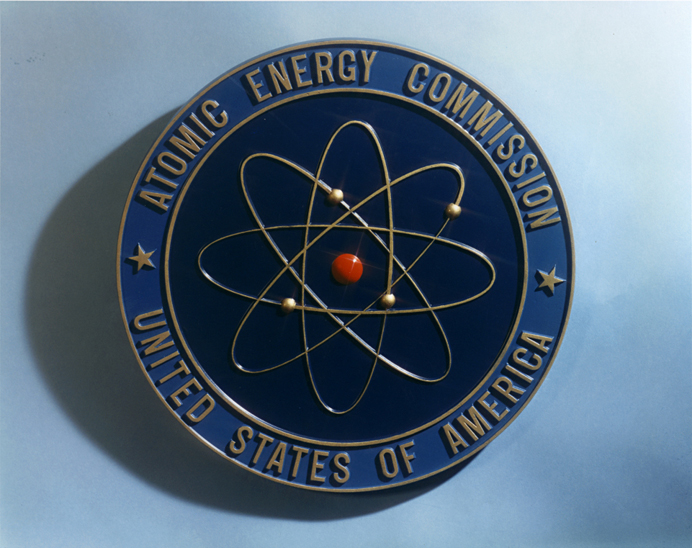
By U.S. Department of Energy (http://ma.mbe.doe.gov/me70/history/photos.htm) [Public domain]
 via Wikimedia Commons

One of the unexpected pleasures of researching your family history is coming across an individual who played a part in history. I was simply looking for birth, marriage, and death records for some first cousins, once removed, the children of my grandfather’s siblings. My research led me to a learn more about a noted scientist in our family, Jesse Dean Perkinson, Jr.

Jesse was born in Tennessee, the son of a railroad conductor and a teacher. He was listed as a student in both the 1920 and 1940 federal censuses. Thanks to the abbreviated curriculum vitae I found in a conference report, I learned about Jesse’s education.(1)  After receiving his BS from the University of Tennessee, he later earned a PhD in biochemistry in 1943 at the University of Rochester.

 From the late 1940s to 1952, Jesse, now Dr. Perkinson, was a senior research scientist at the Oak Ridge National Laboratory in Tennessee.(1) Late, he was affiliated with the University of Tennessee Medical School in Memphis, Tennessee where he was worked in the area of cancer research.(2)

In 1957, Jesse was tapped to be the head of the Education and Training Branch of the Division of International Affairs of the Atomic Energy Commission.(3) Through this position, he was involved in helping other countries explore the peaceful uses of atomic energy.
Dr. Jesse Perkinson, after two years with the AEC, joined the Pan American Union as Chief of Science Development. He continued to work in this capacity for a number of years even after this entity became known as the Organization of American States.  The website of the John F Kennedy Presidential Library includes several photos showing Jesse meeting with President Kennedy during his tenure with the Pan American Union.

Learning more about Jesse Dean Perkinson, Jr, lead me to examine a number of collegiate and scientific journals. My favorite reference to Jesse was in a calendar of upcoming events at Walla Walla College in 1969. The listing referred to Jesse as the person ... “who implemented the Eisenhower Atoms for Peace plan … an authority on the peaceful use of nuclear energy and … presently chairman of the American Inter-Nuclear Committee.”(4)

One individual, working at the Oak Ridge National Laboratory, involved in Eisenhower’s Atoms for Peace Plan, head of a Branch of the Atomic Energy Commission, a scientific leader in the Pan American Union and the Organization of American States. Quite a brush with history, a veritable twentieth-century history lesson as seen through the life of one person, Dr. Jesse Dean Perkinson, Jr.

(1)   Mason, Henry Lea Herbert Steffen Peiser. Metrology and Standardization in Less-developed Countries: The Role of a National Capability for Industrializing Economies; Proceedings of a Seminar Held at Airlie House, Warrenton, Virginia, February 1-4, 1971. : National Bureau of Standards, 1971. Digital images. GoogleBooks. www.books.google.com : 2015.
(2)   “U-T Awarded $4000 By Cancer Society”, Rogersville Review, 19 Apr 1954; digital images, FultonHistory.com (www.fultonhistory.com, accessed 3 Jun 2015).
(3)   “50 Years Ago”, Memphis Commercial Appeal, 4 Aug 2007; online archives (www.commercialappeal.com, accessed 3 Jun 2015).
(4)   “Walla Walla College", North Pacific Gleaner, 15 Sept 1969; digital images, Adventist Archives (http://documents.adventistarchives.org, accessed 3 Jun 2015.


Wednesday, May 20, 2015

Workday Wednesday : At the Warehouse *

Oscar Perkinson, Sr, ca 1950s


My grandfather, Oscar Dean Perkinson, was a local businessman his entire life. After his father died, he was involved in the management of the family store, Perkinson-McAfee, in Woodstock, Georgia. Later he was an area cotton broker. In his last position, he managed the warehouse for the Jones Mercantile Company of Canton, Georgia.

Here my over six-foot-tall grandfather is standing in front of bags of seed or fertilizer, piled high in the warehouse. The warehouse was filled with a variety of things associated with farming -- bales of cotton or hay, bags of fertilizer, concrete mix, seed -- each with a distinctive smell. An interesting article on PsychologyToday.com speaks of the strength of connections between smells and pleasant memories. I've certainly found that to be true for me. Even today I can be somewhere and smell something like hay or fertilizer, and I am immediately reminded of being that little girl visiting her grandfather down at the warehouse. 

* This is one in a series of old family photos showing my ancestors and relatives at work.

Wednesday, April 29, 2015

Workday Wednesday : Looking at "The Way We Worked"(1)


"The Way We Worked"
Johnson City Public Library, Johnson City, TN

The Johnson City (TN) Public Library is currently hosting "The Way We Worked", a traveling exhibit developed by the Smithsonian Institute as part of their Museum on Main Street program. We are able to have the exhibit available locally through the sponsorship of the Tennessee Humanities Council. It was a fascinating exhibit to view, one I hope will be in your area someday.

Seeing "The Way We Worked" has also led me to look back at the variety of occupations about which I have written in some previous blogs. These include:

Gold Miner Samuel Hillhouse

Homesteader Peter Petersen Myren

Land Agent  Thomas Smiley

Minister  Albert Bell Vaughan

Musician Gertrude Andrews Myren

Painter Hans Syversen

Soldier Raleigh Spinks Camp

Surveyor Ernest Perkinson

Tax Collector (and Singing Teacher) Elijah Hillhouse

Teachers Charlotte Vaughan  and her sister Louise Vaughan

Tufted Spreadmaker  Nelson relatives

And finally, the post about the Citizens of Wildcat Cherokee County, Georgia

Over the next few weeks, I'll be sharing some photos of other relatives at work.

(1) "The Way We Worked", http://www.museumonmainstreet.org/theWayWeWorked/index.html.

Tuesday, April 21, 2015

Tuesday's Tips: Looking Beyond Just BMD Records

It’s that old familiar story. A couple meets. They fell in love. They get married. They live happily ever after. The big three, Birth, Marriage, and Death Records (BMD), provide an outline of the story, but they just don’t give enough details.

Take, for example, the marriage of a Perkinson family cousin, Louie Dean Stephens, and her husband, Robert Lee Hays, Jr. Louie Dean was born and raised in Georgia, graduating from Agnes Scott College in Decatur, Georgia.(1) Robert, according to every census record, was born and raised in Oklahoma. How did these two meet?

Several years ago I was researching in several Georgia libraries. At the Marietta (GA) City Library, I found an obituary for Robert L Hays.(2) It gave me some clue as to how these two probably met. It turned out that Robert had been a student at the Georgia School of Technology in Atlanta, the university more commonly known as Georgia Tech. Louie Dean, meanwhile, had attended nearby Agnes Scott College. For many years, girls from the all-girls Agnes Scott College were invited to parties at then all-male Georgia Tech and vice versa.

Following their marriage in June of 1926, the couple, according to census records, city directories, and obituaries, lived in several different places. They resided in Memphis, TN, Richmond, VA, and later lived for over 30 years in New York City. Not what most would expect of a girl from the small town of Woodstock, Georgia, and a fellow from Muskogee, Oklahoma.

Looking back at the obituary from the Marietta Daily Journal, I also learned that Robert had been active in Civil Defense activities and was the director of Civil Defense for Metropolitan Life Insurance Company.(2)

Last week I stumbled upon a great website for learning more about Georgia Tech, SMARTech. Most of the digitized materials are research and scholarly publications, but the website also has online copies of several Tech publications. Included were The Blue Print (yearbook) as well as past issues of the Georgia Tech Alumni Magazine, the student newspaper, and campus humor magazines.

Through materials on SMARTech, I learned more about Robert L Hays, Jr. After looking online through several years of The Blue Print, I found Robert listed as a senior in the 1925 edition.(3) I downloaded the pdf file onto a jump drive and spend some time looking through the yearbook. Besides finding several pictures of Robert, I also learned something about his years at Georgia Tech.


Robert Lee Hays, Jr, class of 1925


The yearbook mentioned that he was from Oklahoma, a member of Beta Theta Phi fraternity, a member of Scabbard and Blade (military honor society) and a Mechanical Engineering graduate.  In the short, humorous biographical sketch, it also said that he “had the girl” as well as an impressive military record in Georgia Tech’s then mandatory ROTC program.

The highlight of browsing the yearbook was finding this picture of Robert and Louie Dean in the ROTC section.

ROTC Regimental Staff, Georgia School of Technology, 1925

Robert L Hays, Jr. was the highest ranking cadet officer of the ROTC regiment at Georgia Tech in 1925. Pictured next to Col. Hays was the regimental sponsor, Miss Louie Dean Stephens. A year after Robert’s graduation from Georgia Tech, the two married.

Searching through Georgia Tech Alumni Magazines available online through the Georgia Tech Alumni Association, I found more information concerning Robert. In the April 1953 issue, Robert was pictured along with information of his appointment as an assistant Vice President of Metropolitan Life Insurance Company.(4) Later, there was a brief obituary for Robert in the Feb 1960 alumni magazine. The obituary noted that Robert had been in charge of building services for the Metropolitan Life Insurance offices in New York City and had been with the company since the late 1920s.(5)

Thanks to a college yearbook, I now had an idea as to how these college sweethearts met, and the two articles in an alumni magazine provided a closer look at Robert's career. I also appreciate my husband, himself a Tech graduate, for passing on to me so many details of Tech history, traditions, and lore. After all, it is things like this which provide those details about relatives that help us better know them as persons.

(1) Agnes Scott College, Silhouette, published 1922; accessed through www.Ancestry.com.
(2) "Ex-Mariettan's Husband, Dies", Marietta Daily Journal, Nov 25, 1959.
(3) Georgia School of Technology, The Blue Print 1925, published 1925; accessed through https://smartech.gatech.edu.
(4) “News of the Alumni by Classes”, Georgia Tech Alumni Magazine, Mar/Apr 1953; accessed through www.issuu.com.
(5) "News of the Alumni", Georgia Tech Alumni Magazine, Feb 1960; accessed through www.issuu.com.