Showing posts with label Vaughan. Show all posts

Thursday, August 24, 2017

It Never Hurts To Go Looking: Courthouse Treasures


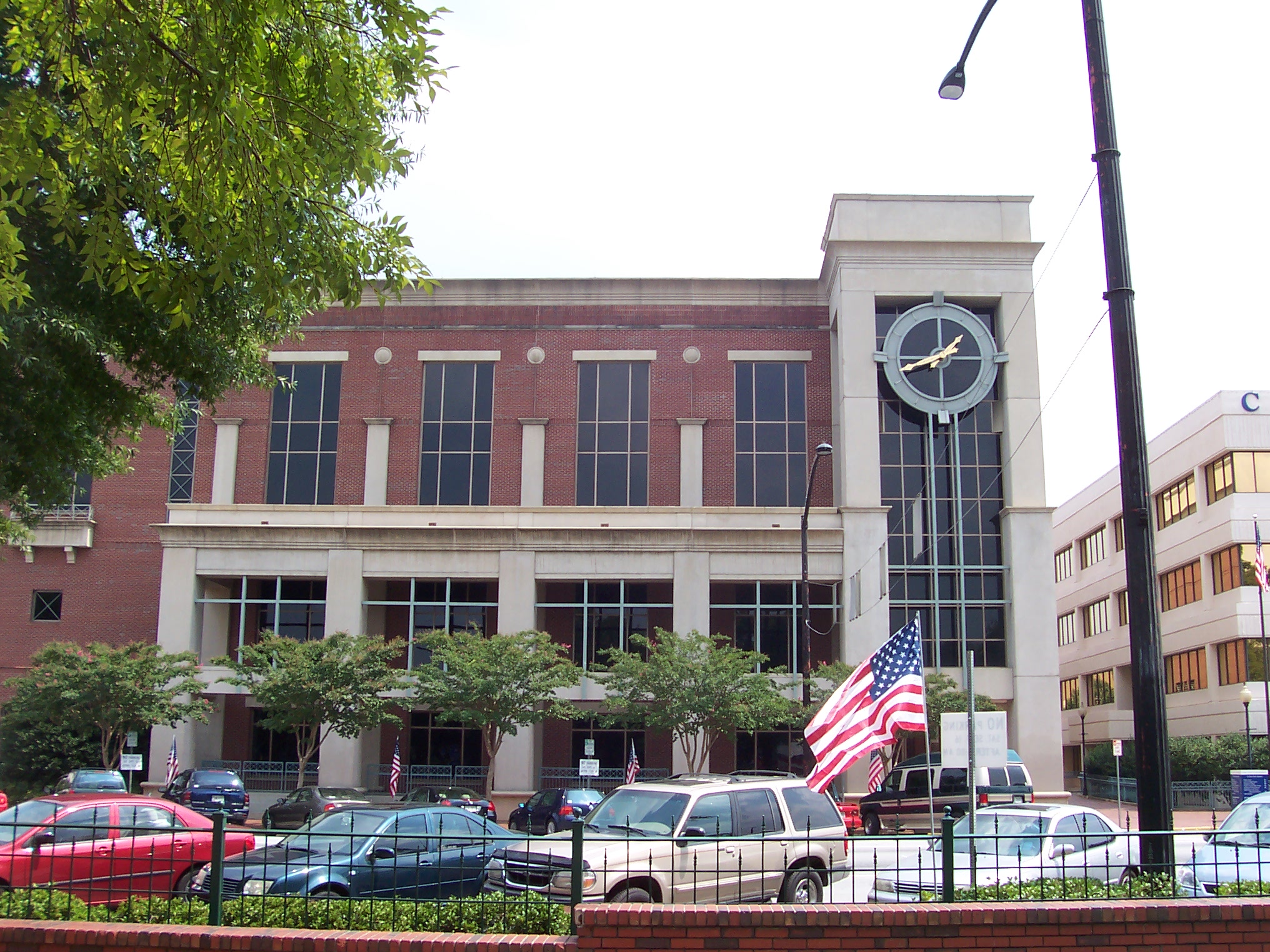
Courthouse, Cobb County, Georgia;
By HowardSF at English Wikipedia (Own work) [Public domain], via Wikimedia Commons

Smartphones. Tablets. Internet. Scanners. There is so much technology that enhances our ability to research and learn more about our ancestors. It took a recent trip to a county courthouse to remind me that old courthouse records can be just as important and meaningful to our research.

During a recent stay in Georgia, I took part of day to visit the Cobb County courthouse in Marietta, Georgia. It seemed the logical place to go since, for some reason, few Cobb County marriage or probate records had been digitized and made available for online research.

Getting Ready - The day before my visit, I did several things that really helped my efforts. First I called the Switzer Library in Marietta, Georgia, and spoke with a helpful person in their Georgia (Genealogy) Room. After I explained the type of information I was seeking, she reminded me, with a friendly voice, that the old records up to 1864 "were burned, you know, during the war" but that later records were all housed in the county courthouse. She also explained that extensive indices for these records were not available at the Library. This call helped me know that the courthouse was exactly where I needed to go for my research.

The second thing I did prior to my visit was to look through my genealogy software, Family Tree Maker, and make a list of those ancestors and some of the relatives from Cobb County for whom I wanted to locate a marriage record, a will, or a probate packet. My handwritten list included:

  • type of record needed
  • name/names of person/s involved
  • probable date of the record

Getting Set - I'm glad to took time to visit the Cobb County, Georgia government's web site, because the county has several different court areas including juvenile, criminal, and probate. I set my GPS for the probate court address, marked the parking garage on Google Maps, and took a picture of my parking spot number with my phone. (I wasn't about to not use my available technology.)

Go - My first top was the Cobb County Probate Office. While there were no public indices to the old probate records, a very helpful clerk in the office offered to look up those people on my list to see if probate records for any of them were housed in that office. From my list of six, only one had any probate records, my second great grandfather, Thomas D. Perkinson. Interestingly, none of the records were indexed under his name. Thomas had died intestate, so all of the records were indexed with the name of his wife Mary and a son William Perkinson, and the records dealt with their efforts to settle Thomas' estate.

As for the other five will or probate records I was seeking, the Probate Office clerk suggested that I might check surrounding counties for records. If my ancestor had owned property in another county, the will might have been probated there instead of in Cobb, their county of residence. Otherwise, the absence of any probate records generally suggests that my other ancestors did not actually own any property or items of value. The suggestion to look in other counties was an idea I need to persue in the future.


After a few minutes, the Court Minutes book was brought out for my use. The probate court did not require the use of white gloves on those old pages; I was simply asked to turn the pages carefully. The book containing the records I needed was huge, about 24 in x 15 in x 3 in. It just barely fit on the desk available for public use. Turning its pages was like going back through time. All entries were hand written. You could see when a new ordinary clerk took over through the change of handwriting. And the handwriting, so beautiful, very ornate on some of the pages, page after page filled with that now rarely seen Spencerian Script.


The index listed four pages of records for this estate: Temporary Letters of Administration, two papers for Permanent Letters of Administration, and records for the Leave to Sell Thomas' property. All four records were indexed under the name of "Perkerson", but the records themselves included both the name "Perkerson" and the correct name "Perkinson".

I was able to take pictures of all of the records with my smart phone then later transcribe them using Transcript, a wonderful freeware program by Jacob Boerema. By reading the transcriptions, I was able to construct a timeline and follow the probate process for the estate of Thomas D Perkinson.

Thomas D Perkinson died on 30 Sep 1875. In the opening of the October term of court, 7 Oct 1875, his widow Mary Putnam Perkinson and his oldest son, William Howard Perkinson, applied to the court to receive Permanent Letters of Administration in order to settle Thomas' estate. The record included that statement that Thomas had "left considerable estate" which needed to be handled. A further statement estimated the value of the estate to be $15,000. The Ordinary was on vacation, so the court gave only Temporary Letters of Administration. In addition, five men were named as appraisers of the estate, among whom were an H Putnam (who might have been Mary Putnam Perkinson's brother Henry) and an L Litchfield (who might have been the Lemuel Litchfield who was married to Thomas and Mary's daughter Nancey Ann Perkinson).

In the November 1875 term of court, Mary and William Howard appeared in court and swore that "to the best of their knowledge" Thomas had died without a will. The actual Permanent Letters of Administration were granted to Mary and son William Howard on 6 Dec 1875 during December court.

By February of 1876, the appraisers had apparently studied the land Thomas owned and had reported to the court; the document to this effect was not recorded in the minutes book. What was recorded was this description of the real estate owned by Thomas. It consisted of
"numerous lots of wild or unimproved land, scattered, in different counties through the state, a great many of said lands being of very little value, and will not pay for the expense of advertising and selling in the usual way [so] the Court being notified that it will be of interest of said estate, to sell these lands at private sale, it is therefore ordered, that [the administrators be] authorized to sell and convey the wild or unimproved lands at private or public sale as their judgment may dictate and to the best interest of said estate."
Basically, Mary and William were given permission to sell the lands any way and for any amount they could get in order that Thomas' estate be settled. How I wish the final return for Thomas' estate had been recorded in these records. It would have been interesting to learn exactly where the properties had been located and who purchased them. Regardless of the final outcome for the probate process, these Court Minutes records were a real treasure to find and read.

My next courthouse stop was at the county's License Office. Today this is where people apply for a marriage license, a weapon carry permit, or papers regarding residence status. It was an interesting and busy office. Fortunately for me, the License Office had a bound index to the marriage records stored there. According to the index, the only existing marriage record I was seeking was that of my Great Grandparents Albert Bell Vaughan, Jr. and Georgia Camp.


Again, I was presented with a large volume of records and was allowed to photograph the desired record. I even smiled when I saw, once again, the signature of H. M. Hammett, the Ordinary of Cobb County, the gentleman who had signed papers relating to settling the estate of Thomas D Perkinson six years prior to this marriage. I had known of their marriage date for a number of years, but there was something very special about actually holding that record book and seeing the official record for the beginning of their married life. It was another courthouse treasure to add to my files.

Marriage Record for Albert Bell Vaughan, Jr, and Georgia Camp

Lessons Learned:

  • When looking through old, handwritten documents such as these, it is not that unusual to find various spellings of an ancestor's name. These documents were generally written by others based on oral information given to them.
  • The contact I made with the city library and my use of the county government's web site helped my visit to go very smoothly. As the saying goes, prior preparation prevents poor performance.
  • I was surprised at the emotional impact of seeing these records. It is one thing to read information digitized online or recorded in a database; it can be something a little different to actually hold an original record written at a specific point in your ancestor's life.
  • I am now starting some lists in my Genealogy Bullet Journal of other Courthouse Treasures I want to search for in the future. I need to include looking for probate records of my Cobb County ancestory in some of the neighboring Georgia counties.
#bulletjournal #genealogybulletjournal #campgenealogy #georgiagenealogy #genealogyhardwaresoftware #lessonslearned #perkinsongenealogy #researchtips #thoseplacesthursday #vaughangenealogy

Update:  You may want to look at this You Tube video from Genealogy Magazine about Courthouse Research. It provides a quick overview presented with a light touch.  https://www.youtube.com/watch?v=DjxOkXDU2cY&feature=youtu.be.

Saturday, July 29, 2017

It Never Hurts to Go Looking: Civil War Records

"Binoculars"; source Pixabay

Last week I finally updated to Family Tree Maker 2017. The process went smoothly, and I was anxious to try out some of its new features. I also started reading with renewed interest Russ Worthington's blog posts on FTM2017, especially his post on Color Coding and Civil War Soldiers. This post inspired me to follow his steps in a search for Civil War records for my Second Great Grandfathers. Here is how my search went.

Although past versions of Family Tree Maker had the ability to filter the index of persons in a tree, I had not found it to be particularly helpful. I just seemed to generate a long list of names for a specific time period. Now, with the color coding of my ancestral lines, after using the filters Russ had suggested, I still had a long list of names of possible Civil War soldiers, but I also had the color coding dots to help me quickly locate just those direct ancestors who might have military records for the Civil War.

I quickly had a short list of eight names, four for whom I had already located Civil War records from a variety of resources and four for whom I had no military information. Interestingly, two were from Georgia, likely Confederate soldiers or sympathizers; the other two were from Pennsylvania, most likely with information to be found in Union records. Because of  ancestors from just two states, I ended up searching for the two individuals from a state in each state database or source rather than searching through a variety of records for just one person at a time.

As I searched, I noted my negative research in the Notes section of the Person Workspace for that ancestor. Below are the notes of my search for my 2nd Great Grandfather William Wallace Andrews of Crawford County, Pennsylvania. My sources and results are indicated with blue. This has become my standard format for a simple research log since particapating in the Genealogy Do-Over several years ago. If I later find other Ancestry databases, I will add it to the Ancestry list in the Notes. If I come across a totally different source, I just add " // " after fold3 then add the source and name of the new database. If I find information in a record, I will change "no record" to "information found in ... record".


It turned out that none of the four direct ancestors in question had any military records, but now I had a research log to indicate that I had searched for records of their military involvement. In addition, the whole process didn't stop me from seeing other family names listed in some of the Georgia records. The surprise for me was learning more about William S Vaughan, the son of my 2nd Great Grandfather Albert Bell Vaughan, Sr. Through the same records in which I found nothing about his father Albert, I learned that William had enlisted in the Confederate Army at the age of 15.(1) At Andersonville in 1864 William contracted measles and became blind in one eye. Later William received an allowance from the state of Georgia to compensate him for his loss of sight. Apparently William was able to return home to Pike County, Georgia for he was listed in the 1864 Census for Reorganizing the Georgia Militia where it was noted that he had an exemption (to any further service) due to his eyes.(2) No more military service for William.

This search period gave me the opportunity to see how the color coding and filters in Family Tree Maker 2017 can help me focus on a specific group of individuals in my research. It also let me see that the Notes field of the Person Workspace in FTM2017 remains a useful place to keep an individual's research log. Finally, using the same geographical databases to search for different people provided to be an efficient strategy, one I'll use again in future research.

Thanks to Russ Worthington's post, I was able to give FTM2017 a good work out and to learn some new information. After all, it never hurts to be looking for new strategies or techniques in researching our ancestors and their families.

#andrewsgenealogy #civilwargenealogy #familytreemaker2017 #georgiagenealogy #pennsylvaniagenealogy #researchtips #vaughangenealogy

1. Compiled Service Records of Confederate Soldiers Who Served in Organizations From the State of Georgia, packet for William S Vaughan, accessed www.fold3.com.
2. Cornell, Nancy J. 1864 Census for Re-Organizing the Georgia Militia; accessed Ancestry.com.

Thursday, January 12, 2017

Leaving 2016 Behind, Moving on in 2017


 Dismiss 
2016-17 by Philip Barrington, source: Open Clip Art


It's that time of year. Time to look back and see how many additional ancestors I have been able to identify sufficiently to feel confident in adding them to my family tree. That is something I had done each January for the past three years after reading Randy Seaver's blog post and watching Crista Cowan's YouTube video.

My method has stayed the same and has been the subject of a previous blog post.  As always, I continue to be grateful that I can simply generate an Ahnentafel Report of my direct ancestors by using my genealogy software, Family Tree Maker. Here is what my report for 2016 looked like.


DateGenerationRelationship# in generation# identified% identified2016 increase
1/6/20171Self11100%
2Parents22100%
3Grandparents44100%
4Great Grandparents88100%
52 Great Grandparents1616100%
63 Great Grandparents323197%
74 Great Grandparents645891%2
85 Great Grandparents1286148%4
96 Great Grandparents2563815%?
107 Great Grandparents512398%10
118 Great Grandparents1024364%36
129 Great Grandparents2048251%25
1310 GreatGrandparents40961212
1411 GreatGrandparents819288
1512 GreatGrandparents16,38488
1613 GreatGrandparents32,76822
1714 GreatGrandparents65,53622
Totals
35147% *109
* Percentage of those identified in Generations 1-10

I realize that some of the totals in my table may seem strange. For starters I have no increase in known ancestors for Generation 9 because I obviously had a typo in my previous year's report. It is possible to remove or change a relationship or two based on new research, but I know that I certainly did not lose almost 30 ancestors in that one generation during the year! I would probably still be shaking my head in bewilderment if that had actually happened.

In the report for 2016, I also stopped trying to determine the percentage of ancestors identified after Generation 12. The percentages were just too small to have any significance. Instead, I will continue to just look at the increase in numbers over the previous year's report.

Similarly, I decided to use those ancestors in Generations 2-10 as my basis for determining the percentage of ancestors I have now identified. Identifying ancestors in Generations 11-17 or beyond is just a unexpected bonus in my research.

But it isn't just a numbers game. The report prompts me to try to analyze where I found information, strategies that worked, and questions that still linger.

By using the Will and Probate Records available through Ancestry.com as well as browsing similar records on FamilySearch.org, I was able to identify with some degree of confidence a number of ancestors in generations 11-17. By studying names of beneficiaries listed in a will and comparing them with known children, siblings, and/or spouses, I succeeded in pushing my family tree back additional generations through information found through these will and probate records.

Looking back, I knew that during this year a lot of my personal research had focused on ancestors who had lived in New England. Bless the clergy and town clerks of those areas who had maintained such detailed records of births, marriages, and deaths from the mid-1650s and forward. These records, combined with will and probate records, kept me dancing around. Sometimes going one step back, then a few steps sideways, backwards and forward a lot, but eventually these records helped me identify more of my Massachusetts ancestors.

For me there is real value in doing this report each year. It isn't just about the total number of ancestors I have identified, although it is nice to document. It is more about seeing where and how I was able to learn about these new people in my family tree. And yes, it continues to bother me that I still cannot find the name of the wife of my 3 Great Grandfather William Vaughan. But it also convinces me that there are additional resources I haven't used, strategies I haven't tried, more hints to prove - or disprove. All part of trying to learn more about my ancestors.

Lessons Learned in 2016
  • I spent enough time studying wills and probate records that I actually got where I could understand the terminology and learned more about how our the legal system functioned in earlier times. These records also spoke volumes as to the nature of slavery as well the legal status of  women in the past. This prompted me to write several posts about the slave records I found in wills, posts that are now linked with the Slave Name Roll Project developed by Schalene Dagutis.
  • Ancestry's indexed Will and Probate Records were easy to use, but I frequently found additional information by browsing the unindexed will and probate records on FamilySearch.org. Browsing page by page, section by section continues to provide fruitful information.
  • There have to be some new strategies for learning about women in the 1800s. I plan to use some techniques suggested by Jennifer Dondero of The Occasional Genealogist. Finding the elusive Mrs. William Vaughan is a research goal for 2017.
#analyzeinformation #genealogyresources #lessonslearned #researchgoals #slavenamerollproject #vaughangenealogy

Friday, September 18, 2015

Is That Albert Peeping Through a Crack in the Brick Wall?

Albert Bell Vaughan Jr
My Great Grandfather, Albert Bell Vaughan, Jr, is someone about whom a lot has been written. Several articles written about this Baptist minister mention how he had been apprenticed as a painter in Jackson, Tennessee in the early 1870s.(1) His early stint as a painter had fascinated me. He left this occupation after just a few years then attended college and became a full-time minister, educator, and college president. Talk about a career change.

I had been trying for some time to learn more about the "painter years", especially since he seemed to have vanished during the 1870 federal census. He wasn't listed as living with his family, nor could I find him living on his own. Articles sometimes mentioned that he lived in Jackson, Tennessee during this time in his life, but no Albert Vaughan seemed to be listed in an 1870 Tennessee census record.

Recently I tried a slightly different search technique in Ancestry.com's 1870 census records. Instead of searching for his last name, Vaughan/Vaughn, I just searched using his first name of Albert, his birth year, and the Georgia birthplace, no surname. I filtered the search to view only Tennessee records.

1870 Federal Census, Jackson, Madison, Tennessee, accessed through Ancestry.com

Eureka! I finally found a possible Albert Vaughan in the 1870 Tennessee census. Granted the census record I found listed an "A Vann" rather than Albert Vaughan, but the age, occupation, and birthplace agree with my Albert Vaughan. He was living in the household of another painter, a circumstance that was quite probable for a young apprentice, and he was living in Jackson, Tennessee.

So now, I have a possible 1870 census record for 18-year-old Albert, the apprentice painter. One possible answer had lead to several new questions. Who in the world were the Huddlestons? They were about the same age of Albert's parents, Albert Bell Vaughan, Sr and Charlotte Slade Vaughan. Could M Huddleston have been a relative or at least a close friend of either Albert Sr or Charlotte? And what about Mary Huddleston? She was the age of Albert Jr's grandparents. Could she have been a relative of Albert Jr's?  I keep wondering if there might be some family connection. After all, it is hard to imagine sending a teenager several hundred miles away to live with strangers. Surely, there were other painters living closer to the family in Georgia with whom Albert could learn the painting trade.

I'm calling this census record only a crack in the wall, not a wall buster. After all, one line of census information is already leading me to more questions about Albert and this period in his life. The questions don't end, but then that's a reason researching our families can be so interesting.

(1) Memoirs of Georgia: Containing Historical Accounts of the State's Civil, Military, Industrial, and Professional Interests and Personal Sketches of Many of Its People, vol. 2. Atlanta: Southern Historical Association, 1895. accessed through Google Books.

Monday, August 3, 2015

Have You Heard the News* About the Rev. Albert Bell Vaughan, Jr.?

the Reverend Albert Bell Vaughan, Jr.
photo in personal collection

My GreatGrandfather Albert Bell Vaughan, Jr. spent most of his life preaching the gospel. He preached in Baptist churches in both Georgia and Texas, to large and small congregations, and I grew up hearing many stories about this learned, respected minister. Still, I was able to learn more about him through my newspaper research.

As a college student in 1878, he presented a speech concerning the future of college students at his graduation from Mercer University.(1) In a little over twenty-five years, his oratorical skills lead him to be named to preach the main sermon at the Georgia Baptist Convention of 1905.(2)

One fascinating article was basically a testimonial Rev. Vaughan gave concerning the success of his eye surgery which had been performed by an Atlanta oculist. It read like a news article but in actuality seemed to be more like an ad for the surgery.(3) It was touching, though, to read how the surgery enabled him to then be able to read the New Testament in Greek. You can't help but be impressed by that!

Another interesting article related how Rev. Vaughan visited a young man in jail who had been accused of murder. Following a visit in jail from the Rev. Vaughan, the young man broke down and confessed to the crime he had committed.(4)


I was surprised to read how my GreatGrandfather, the minister of the Baptist churches in both Canton and Woodstock, Georgia, at the time, was also involved in local politics. At a meeting in 1892, Rev. Vaughan was the individual who proposed the slate of candidates to be endorsed by the county's Democratic Party.(5)

News of some of his church pastorates appeared in the Atlanta newspaper. Apparently the local church would have what amounted to an annual reelection of its pastor as when A. B. Vaughan was reelected to pastor the Baptist Church of Canton in 1900.(6) This information, interestingly enough, followed information about cases heard in Superior County Court the previous week and before news of the new telegraph operator for the railroad station in Canton. There were several short articles relating how Rev. Vaughan had turned down the opportunity to become the pastor of other churches.

My favorite article appeared in the fall of 1899. Albert Bell Vaughan, Jr. had been the minister at Canton [Georgia] Baptist Church for 13 years. However, in 1898 a schism divided the congregation over some unspecified issues. (I would love to have found an article about which happened, but there was no word in the paper about the situation in the church.) When he was not able to unify the congregation, Rev. Vaughan left the Canton church and moved to Nacogdoches, Texas to serve a church there. His daughter Miriam wrote of the family's year in Texas in her private diary. After a year, the church in Canton, Georgia, asked Rev. Vaughan to return. He accepted their offer, resulting in this article in The [Atlanta] Constitution.(7) After he returned to the Canton church, he never left the state of Georgia again, only serving Georgia churches until his death.


* Have You Heard the News is a series of posts about family information gleaned from newspapers available through www.fold3.com, www.ancestry.com, the Digital Archives of Georgia, and the Library of Congress Chronicling America.

(1) "Mercer University Commencement Day", The Daily Constitution, Atlanta, GA, 6 Jul 1878, accessed http://www.fold3.com/image/81080729/
(3) "A Canton Clergyman Has Remarkable Experience in Atlanta", The Constitution, Atlanta, GA, 16 Dec 1894, p 27; accessed http://www.fold3.com/image/79174859
(4) "Willis" Confession", The Constitution, Atlanta, GA, 2 May 1896, p 3. accessed http://www.fold3.com/image/79367935/
(5) "The Democrats of Cherokee". The Constitution, Atlanta, GA, 8 Jun 1892,p 2, accessed http://www.fold3.com/image/84243648/
(6) "Was Very Hard Week's Work", The Constitution, Atlanta, GA, 16 Sep 1900, p 8; accessed http://www.fold3.com/image/82664059/
(7) "Canton Baptists Are Happy", The Constitution, Atlanta, GA, 2 Dec 1899, p 3; accessed http://www.fold3.com/image/25/85536322/


Wednesday, April 29, 2015

Workday Wednesday : Looking at "The Way We Worked"(1)


"The Way We Worked"
Johnson City Public Library, Johnson City, TN

The Johnson City (TN) Public Library is currently hosting "The Way We Worked", a traveling exhibit developed by the Smithsonian Institute as part of their Museum on Main Street program. We are able to have the exhibit available locally through the sponsorship of the Tennessee Humanities Council. It was a fascinating exhibit to view, one I hope will be in your area someday.

Seeing "The Way We Worked" has also led me to look back at the variety of occupations about which I have written in some previous blogs. These include:

Gold Miner Samuel Hillhouse

Homesteader Peter Petersen Myren

Land Agent  Thomas Smiley

Minister  Albert Bell Vaughan

Musician Gertrude Andrews Myren

Painter Hans Syversen

Soldier Raleigh Spinks Camp

Surveyor Ernest Perkinson

Tax Collector (and Singing Teacher) Elijah Hillhouse

Teachers Charlotte Vaughan  and her sister Louise Vaughan

Tufted Spreadmaker  Nelson relatives

And finally, the post about the Citizens of Wildcat Cherokee County, Georgia

Over the next few weeks, I'll be sharing some photos of other relatives at work.

(1) "The Way We Worked", http://www.museumonmainstreet.org/theWayWeWorked/index.html.

Wednesday, November 19, 2014

Thankful Thursday: Giving Thanks For ... Cousins


from The Columbia Evening Missourian 1922
by johnny, openclipart.com

Gathered around my virtual Thanksgiving table this year are several new cousins.  They are family I now know after hearing from them through comments each made to one of my blog posts.  And I am thankful for knowing more about them and more about our family connections.

A comment connected to posts I had written concerning The Camp Family Letters has lead me to a second cousin who just happened to be the one who donated the Camp papers to Emory University in the first place.  Since her comment we've exchanged family photos and learned we both share a fascination with the enigmatic Charlotte Vaughan.  We're even facebook friends now.

Following my Veterans Day post, I heard from a descendant of William S Vaughan, my second great uncle.  This cousin provided me with information concerning William's service in the Confederate Army.  The information was clear, detailed, and contained citations.  I appreciated being able to learn more about a brother of my great grandfather, Albert Vaughan, a relative who is now more than just a name.

Another comment came just the other day from a great grandson of Samuel Clayton Dean.  This third cousin sent me a fact filled e-mail about Samuel.  It included, at long last, information about Samuel's death.  The ggrandson also filled me in on some of the other members of Samuel's family, information I might not have discovered through my personal research.

Thanks to these new-to-me cousins for taking the time to comment on a blog post.  Thanks for sharing your information.  And thanks for giving me a present day connection with your family.

Sunday, October 12, 2014

Now I Am Two

Birthday Cake With 2 Candles
By Rlevente via Wikimedia Commons

When I wrote my first post of this blog on October 12, 2012, I wondered if anyone would ever read my blog.  And there were more questions -- what to write about, how much to write in a post, how often.

Today, Celebrating Family Stories is two years old.  Thank you to those of you who read my posts, who share information with me, who contact me in a variety of ways, and who have bided with me as I continue to try and answer my questions.

What have I learned in two years?  For starters, NEVER be surprised at what I learn about a family member.  NEVER stop looking for elusive information, although taking a break from a person for a while can make me anxious to return later on.  NEVER underestimate the importance of having my facts straight before I write a post.  And CONTINUALLY to be surprised at the posts that seem to click with others.

My most read posts this year dealt primarily with using technology and organization in gathering family history.  The top five were:


As for my favorite posts, I especially enjoyed writing those where I felt I have started to know an ancestor as a person.  Among them are these three:

Now, let's eat some cake.

Wednesday, October 1, 2014

Treasure Chest Thursday : No Need to Pass the Salt


Dining at the Vaughan family home meant eating in the dining room, with a pressed linen table cloth, linen napkins, and no salt shakers on the table.  Instead each person had an individual salt dish.  Growing up, I remember the short etiquette lessons we received as we drove down for a meal with members of the Vaughan family.  So, I learned as a child, just how to get a pinch of salt from the salt dish placed above my place.

Prior to the sale of the family home in the 1980s, family members arranged a time for interested family members to come to the house and select a few mementos from the home's contents.  I knew, even if I never used them, I wanted some of the family salt dishes.  My four are pictured above.

Just looking at them bring memories of those family dinners.  Maybe I need to set them on my table when a full table means having to continually pass the salt from one person to another.  Maybe this Thanksgiving ...

Friday, September 26, 2014

The Tale of a House

Vaughan Family Home, LaGrange, Georgia
personal collection
 Once upon a time, my Great Grandfather, Albert Bell Vaughan, decided it was finally time to build a house for his family.  After years of living in various church parsonages and temporary homes from Georgia to Texas and back, LaGrange, Georgia, became their home in 1902.  At that time Dr. Vaughan was called to be the pastor of the First Baptist Church in LaGrange and served the church in this capacity for a number of years.  In addition, he was also the president of Southern Female College in LaGrange for several years.

A 1912 city directory listed the family residence as being on Vernon Road.  Sometime between 1912 and 1920, the family built this home located on Park Avenue in LaGrange; the family was listed as residing at this Park Avenue house in the 1920 census.

As the photo above shows, Dr. Vaughan's study was originally in the right front corner of the second flour.  Later, the family expanded the porch at the left and turned the enclosed area into his study.

Vaughan Family Home, ca 1970s


Dr. Albert Bell Vaughan's study
Following his death in 1930, the family kept his study just as he had left it.  The house, in turn, was left to his widow, my Great Grandmother Georgia Camp Vaughan, who lived in the house until her death in 1934.  According of copies of LaGrange City Directories accessed through Ancestry.com, sisters Clara and Louise Vaughan then lived in the family home until Louise's marriage in the mid 1940s. 

In the early 1950s the other children of Albert Bell Vaughan and Georgia Camp Vaughan appeared to have each released or sold any claim to the house.  Through a series of warranty deeds and quit claim deeds signed by her sisters, sister-in law, sister's children and brother, Clara Vaughan became the sole owner of the house.  These transactions were all recorded in the Troup County, Georgia Grantor/Grantee Deed Indexes also accessed on Ancestry.com.  The entire process took almost two years for the documents from all parties to be signed and recorded.

The Legal Dictionary found on FreeDictionary.com proved helpful to me as I read over the recordings of the various documents.  These definitions clarified the transactions:


Grantee  An individual to whom a transfer or conveyance of property is made (buyer).
Grantor  An individual who conveys or transfers ownership of property (seller).
Quitclaim Deed  A legal instrument by which the owner of a piece of real property (grantor) transfers his or her interest to a recipient, called the grantee.  The owner terminates his or her right and claim to the property, allowing the claim to transfer to the grantee (buyer).
Warranty Deed   A type of deed in which the grantor (seller) guarantees that he or she holds clear title to a piece of real estate and has the right to sell it to the grantee (buyer).

Clara continued to live in the family home until her death in 1979.  Following her death, the home was sold in the 1980s.

Like many old family homes, just looking at pictures of this home brings back many memories of time spent there as I was growing up.  The researcher in me also appreciated having a reason to learn a little more about the transfer of property.  And, I was especially glad I looked at the new records section on Ancestry.  Otherwise, I would never have found all the digitized records from Troup County, Georgia which enabled me to explore property records concerning the Vaughan family home. 

Thursday, August 14, 2014

Treasure Chest Thursday: Miss Clara's Glasses


Several times a day  I pass by and glance at these glasses.  They rest on an old marble topped table next to some other family mementos.  The glasses were given to me by a cousin some years ago.  At that time, my cousin mentioned that the glasses once belonged to my Great Aunt Clara Estelle Vaughan.

The other day I was looking through the photo albums that belonged to Mary Louise Vaughan and found several pictures of Clara wearing glasses that looked much like those pictured above.

Three of the Vaughan Sisters, Louise, Clara, and Eleanor

Clara Vaughan sitting between two friends
Oh course, the picture of Clara and her friends is my favorite.  After all, she's wearing one of those wonderful hats, just as her sister Charlotte previously wore.  Who knew such fashion was available in the town of LaGrange, Georgia?

Once again, I am grateful that someone hung on to Clara's glasses and that they eventually found their way to me.

Wednesday, July 16, 2014

The Hat Made Me Do It

Charlotte Ann Vaughan
photo from private collection of LuAnne Holladay

That hat.  I admit it.  The hat is what made me want to write a post about Charlotte Ann Vaughan.  

Charlotte Vaughan was my Great Great Aunt.  She was the youngest of the seven daughters of Rev. Albert Bell Vaughan, and she was the daughter who took a somewhat different path with her life from that followed by her other six sisters.  Although she was the youngest Vaughan sibling, she was also the first to die.  Some time in the past I remember hearing it mentioned that she had lived in New York.  For years that was about the extent of my knowledge of Charlotte and her life.

When I transcribed her sister Miriam's Variety Book several years ago, I found that Miriam wrote a short note about Charlotte's birth, the entry below.  Miriam did not often mention her other siblings in her diary, yet she had this one note about Charlotte.
"Nacogdoches, Texas.  October 2nd, 1899.  Monday at 10:10 am  Charlotte Vaughan was born.  House of the Seven Sisters".

In my collection of old family photos and scrapbooks, there are a number of pictures of Charlotte as she was growing up in LaGrange, Georgia and in Canton, Georgia.  An earlier post about the Vaughan Sisters included a picture of young Charlotte.  Charlotte was the youngest child in the Vaughan family, and my father was the first child born to one of the Vaughan siblings; they were relatively close in age.  There is even a picture of Charlotte, my father, and other young cousins.

Several of Charlotte's sisters attended Southern Female College in LaGrange, Georgia (after all, their father had been the President of the College).  Charlotte, however, traveled away from the area to attend college.  Her college record from Columbia University indicates that she attended and received degrees from Georgia State College, Florida State College for Women, and from Columbia.(1)

It looks as if Charlotte had a promising career as an educator.  During the summer of 1926, while still a student at Columbia, Charlotte was on the faculty of the University of North Carolina, teaching essentially elementary school curriculum and methods courses during the summer session.(2)  Her Columbia record book also shows summers she spent teaching in Pennsylvania, Washington, and Michigan.  According to her obituary in The LaGrange Daily News, Charlotte later taught at several prestigious schools in New York including the Birch-Wathen School and the Brearley School. (3)

In November of 1930, Charlotte wrote the following letter to the editor of The New Republic, a weekly magazine focusing on American culture and politics.  Reading it, I felt as if I were back in a college lit class.  Charlotte's  comments and the nature of the magazine provided a glimpse into her intellect.


Letter to the Editor
The New Republic 12 Nov 1930

In the midst of her teaching career, Charlotte resigned from her teaching positing at The Brearley School due to health problems in the spring of 1937.(3)  On her way back to her family in Georgia, Charlotte stopped in Rock Hill, South Carolina, to visit with her sister Eleanor.  There she apparently suffered a heart attack and died at the age of 37.(4)

There is a sadness to think of her dying so much younger than any of her siblings.  But there is also a smile when I look at that photo of Charlotte, fashionable, confident, poised, wearing that hat.  After all, this photo shared with me by a cousin was what prompted me to pull together the tidbits of information I had accumulated concerning Charlotte.

(1)  "Record Book of Charlotte Ann Vaughan", Teachers College, Columbia University, New York, 1928; private college of LuAnne Holladay.
(2)  "The Catalogue 1925-26." digital images. University of North Carolina. Internet Archive. https://archive.org : 2014.
(3)  "Miss Charlotte Vaughan of New York and LaGrange Died Sunday in Rock Hill at Home of Sister," LaGrange [Georgia] Daily News, 7 June 1937, p. 1.
(4)  "South Carolina, Death Records, 121-1960." Database and images. Ancestry.com. http://www.ancestry.com/serch/ : 2013.

Wednesday, January 15, 2014

Wordless Wednesday (almost): Rev. Dr. Albert Bell Vaughan, Jr.

Dr. Albert Bell Vaughan, Jr.
ca 1910

The Reverend Dr. Albert Bell Vaughan, Jr. was my Great Grandfather.  I now have a very usable photo of him, thanks to my new Flip-Pal scanner.  The original photo pictured below is probably 100 years old, badly curled, and the heavy paper on which it was printed is splitting into plies.  It even has holes at the top and bottom as if someone had nailed it to a wall.  

I decided to scan it as my first Flip-Pal project.  It was amazing to see how the Flip-Pal stitched together 11 images to form the new picture.  After opening the stitched photo in Photoshop, I spent a few minutes cropping, doing a little touch-up, and converting to a version of black and white photography, ending up with the great picture above. 
  

Original photo, approximately 10 x 16 in.

Flip-Pal picture, stitched from 11 scans