Showing posts with label Camp. Show all posts

Thursday, August 24, 2017

It Never Hurts To Go Looking: Courthouse Treasures


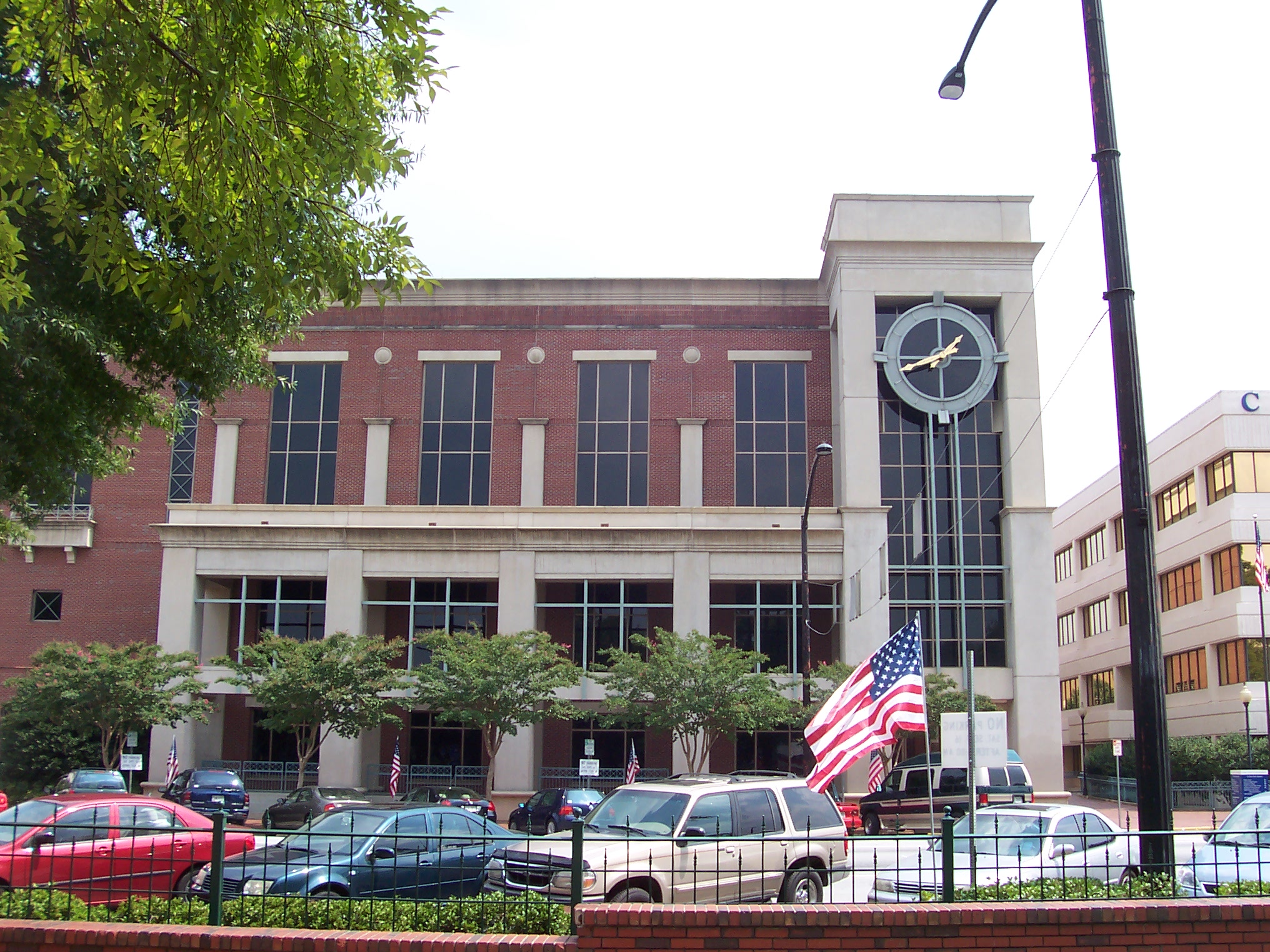
Courthouse, Cobb County, Georgia;
By HowardSF at English Wikipedia (Own work) [Public domain], via Wikimedia Commons

Smartphones. Tablets. Internet. Scanners. There is so much technology that enhances our ability to research and learn more about our ancestors. It took a recent trip to a county courthouse to remind me that old courthouse records can be just as important and meaningful to our research.

During a recent stay in Georgia, I took part of day to visit the Cobb County courthouse in Marietta, Georgia. It seemed the logical place to go since, for some reason, few Cobb County marriage or probate records had been digitized and made available for online research.

Getting Ready - The day before my visit, I did several things that really helped my efforts. First I called the Switzer Library in Marietta, Georgia, and spoke with a helpful person in their Georgia (Genealogy) Room. After I explained the type of information I was seeking, she reminded me, with a friendly voice, that the old records up to 1864 "were burned, you know, during the war" but that later records were all housed in the county courthouse. She also explained that extensive indices for these records were not available at the Library. This call helped me know that the courthouse was exactly where I needed to go for my research.

The second thing I did prior to my visit was to look through my genealogy software, Family Tree Maker, and make a list of those ancestors and some of the relatives from Cobb County for whom I wanted to locate a marriage record, a will, or a probate packet. My handwritten list included:

  • type of record needed
  • name/names of person/s involved
  • probable date of the record

Getting Set - I'm glad to took time to visit the Cobb County, Georgia government's web site, because the county has several different court areas including juvenile, criminal, and probate. I set my GPS for the probate court address, marked the parking garage on Google Maps, and took a picture of my parking spot number with my phone. (I wasn't about to not use my available technology.)

Go - My first top was the Cobb County Probate Office. While there were no public indices to the old probate records, a very helpful clerk in the office offered to look up those people on my list to see if probate records for any of them were housed in that office. From my list of six, only one had any probate records, my second great grandfather, Thomas D. Perkinson. Interestingly, none of the records were indexed under his name. Thomas had died intestate, so all of the records were indexed with the name of his wife Mary and a son William Perkinson, and the records dealt with their efforts to settle Thomas' estate.

As for the other five will or probate records I was seeking, the Probate Office clerk suggested that I might check surrounding counties for records. If my ancestor had owned property in another county, the will might have been probated there instead of in Cobb, their county of residence. Otherwise, the absence of any probate records generally suggests that my other ancestors did not actually own any property or items of value. The suggestion to look in other counties was an idea I need to persue in the future.


After a few minutes, the Court Minutes book was brought out for my use. The probate court did not require the use of white gloves on those old pages; I was simply asked to turn the pages carefully. The book containing the records I needed was huge, about 24 in x 15 in x 3 in. It just barely fit on the desk available for public use. Turning its pages was like going back through time. All entries were hand written. You could see when a new ordinary clerk took over through the change of handwriting. And the handwriting, so beautiful, very ornate on some of the pages, page after page filled with that now rarely seen Spencerian Script.


The index listed four pages of records for this estate: Temporary Letters of Administration, two papers for Permanent Letters of Administration, and records for the Leave to Sell Thomas' property. All four records were indexed under the name of "Perkerson", but the records themselves included both the name "Perkerson" and the correct name "Perkinson".

I was able to take pictures of all of the records with my smart phone then later transcribe them using Transcript, a wonderful freeware program by Jacob Boerema. By reading the transcriptions, I was able to construct a timeline and follow the probate process for the estate of Thomas D Perkinson.

Thomas D Perkinson died on 30 Sep 1875. In the opening of the October term of court, 7 Oct 1875, his widow Mary Putnam Perkinson and his oldest son, William Howard Perkinson, applied to the court to receive Permanent Letters of Administration in order to settle Thomas' estate. The record included that statement that Thomas had "left considerable estate" which needed to be handled. A further statement estimated the value of the estate to be $15,000. The Ordinary was on vacation, so the court gave only Temporary Letters of Administration. In addition, five men were named as appraisers of the estate, among whom were an H Putnam (who might have been Mary Putnam Perkinson's brother Henry) and an L Litchfield (who might have been the Lemuel Litchfield who was married to Thomas and Mary's daughter Nancey Ann Perkinson).

In the November 1875 term of court, Mary and William Howard appeared in court and swore that "to the best of their knowledge" Thomas had died without a will. The actual Permanent Letters of Administration were granted to Mary and son William Howard on 6 Dec 1875 during December court.

By February of 1876, the appraisers had apparently studied the land Thomas owned and had reported to the court; the document to this effect was not recorded in the minutes book. What was recorded was this description of the real estate owned by Thomas. It consisted of
"numerous lots of wild or unimproved land, scattered, in different counties through the state, a great many of said lands being of very little value, and will not pay for the expense of advertising and selling in the usual way [so] the Court being notified that it will be of interest of said estate, to sell these lands at private sale, it is therefore ordered, that [the administrators be] authorized to sell and convey the wild or unimproved lands at private or public sale as their judgment may dictate and to the best interest of said estate."
Basically, Mary and William were given permission to sell the lands any way and for any amount they could get in order that Thomas' estate be settled. How I wish the final return for Thomas' estate had been recorded in these records. It would have been interesting to learn exactly where the properties had been located and who purchased them. Regardless of the final outcome for the probate process, these Court Minutes records were a real treasure to find and read.

My next courthouse stop was at the county's License Office. Today this is where people apply for a marriage license, a weapon carry permit, or papers regarding residence status. It was an interesting and busy office. Fortunately for me, the License Office had a bound index to the marriage records stored there. According to the index, the only existing marriage record I was seeking was that of my Great Grandparents Albert Bell Vaughan, Jr. and Georgia Camp.


Again, I was presented with a large volume of records and was allowed to photograph the desired record. I even smiled when I saw, once again, the signature of H. M. Hammett, the Ordinary of Cobb County, the gentleman who had signed papers relating to settling the estate of Thomas D Perkinson six years prior to this marriage. I had known of their marriage date for a number of years, but there was something very special about actually holding that record book and seeing the official record for the beginning of their married life. It was another courthouse treasure to add to my files.

Marriage Record for Albert Bell Vaughan, Jr, and Georgia Camp

Lessons Learned:

  • When looking through old, handwritten documents such as these, it is not that unusual to find various spellings of an ancestor's name. These documents were generally written by others based on oral information given to them.
  • The contact I made with the city library and my use of the county government's web site helped my visit to go very smoothly. As the saying goes, prior preparation prevents poor performance.
  • I was surprised at the emotional impact of seeing these records. It is one thing to read information digitized online or recorded in a database; it can be something a little different to actually hold an original record written at a specific point in your ancestor's life.
  • I am now starting some lists in my Genealogy Bullet Journal of other Courthouse Treasures I want to search for in the future. I need to include looking for probate records of my Cobb County ancestory in some of the neighboring Georgia counties.
#bulletjournal #genealogybulletjournal #campgenealogy #georgiagenealogy #genealogyhardwaresoftware #lessonslearned #perkinsongenealogy #researchtips #thoseplacesthursday #vaughangenealogy

Update:  You may want to look at this You Tube video from Genealogy Magazine about Courthouse Research. It provides a quick overview presented with a light touch.  https://www.youtube.com/watch?v=DjxOkXDU2cY&feature=youtu.be.

Sunday, July 31, 2016

The Slave Name Roll Project*: The Camps of Rutherford County North Carolina

"Power of Words" by Antonio Litterio,
via Wikimedia.org

Thomas Camp, my sixth Great Grandfather, died in 1798, leaving 10 children from his first marriage and 12 children by his second wife. Six of these younger children remained in the Rutherford County area of North Carolina for the rest of their lives . Thomas' will makes no mention of any slaves, but looking at the wills of his children who lived in Rutherford County provided some information as to how they had managed the property which had been left to them in their father's estate.

Son Crenshaw Camp, in a will written in 1808, ten years after his father's death, mentioned one slave, a Negro boy named Embro who was to be given to Crenshaw's brother George Camp.(1)

Daniel Camp, another of Thomas' sons, served as the sheriff of Rutherford County, NC in the late 1790s. In the middle of a book of will transcriptions was information concerning a slave transaction that involved Daniel. The slave Stantee had been the property of William Nevills and was described as "an african by birth nearly thirty six years of age about five feet ten, high complexion, very dark".(2) Sheriff Camp had overseen the public sale of Stantee to Lewis Beard; the auction had been held on 25 August 1795 to settle a debt of Mr. Nevills.

The will of a William Camp in this volume turned out not to be "my" William Camp. The will, however, provides information concerning several slaves who were part of the estate of another William Camp.(3) This will, proved in Rutherford County in February of 1855, mentioned the following:

  • a negro woman named Ferre to my wife Elizabeth
  • a negro boy named Wade to my wife Elizabeth, Wade to go to my son John Camp upon her death

There were several interesting records concerning Thomas Camp's son Joshua Camp.(4) The inventory of the estate provided the names of 17 slaves who were part of Joshua's estate: 

  • [men] Sandy, Major, Dick, Sam, Frank
  • [women] Liz, Judy, Harriet, [fourth woman's name was unreadable]
  • [boys and girls] Gardison, William,  Adam, Henderson, Albert, Polly, Martha, Victory.

Additional probate documents concerning Joshua Camp's estate (pages 673-674 of the same volume of records) provided further information concerning the sale of some of the slaves in October of 1853, including:

  • Frank was purchased by J T Camp [Joshua's son John T Camp, estate executor]
  • Sandy was purchased by J T Camp
  • Dick was purchased by John First
  • William was purchased by James Phillips
  • Albert was purchased by George Camp [probably Joshua's son]
  • Nancy Camp [Joshua's widow] purchased an unnamed male and female
  • Major was purchased by J O Simmons

After I wrote the first draft of this post, I was looking for other Camp family members in the 1870 census for Rutherford County, North Carolina. In my search I saw the census records of two Rutherford County residents who may well have been some of Joshua's former slaves - Frank Camp and Gardison Camp - now farmers, now free, now with their own families, their stories continuing.


* Blogger Schalene Dagutis, through her blog Tangled Roots and Trees, developed the Slave Name Roll Project in 2015. This project is a means for listing the names of slaves as individual names are located through our research of wills, probate records, and property records. It gives us the opportunity to provide information so that present day descendants can make a connection to their enslaved ancestors.


(1) North Carolina Probate Records, 1735-1970, Rutherford County, Wills 1782-1898, vol. A-F, p85, will of Crenshaw Camp; accessed on FamilySearch, https://familysearch.org.


(2) North Carolina Probate Records, 1735-1970, Rutherford County, Wills 1782-1898, vol. A-F, p44, indenture between Daniel Camp and Lewis Beard; accessed on FamilySearch, https://familysearch.org.
(3) North Carolina Probate Records, 1735-1970, Rutherford County, Wills 1782-1898, vol. A-F, p287, will of William Camp; accessed on FamilySearch, https://familysearch.org.
(4) North Carolina Probate Records, 1735-1970, Rutherford County, Estates, 1847-1854, Vol. C, p 183, estate of Joshua Camp; accessed on FamilySearch, https://familysearch.org.

Wednesday, April 29, 2015

Workday Wednesday : Looking at "The Way We Worked"(1)


"The Way We Worked"
Johnson City Public Library, Johnson City, TN

The Johnson City (TN) Public Library is currently hosting "The Way We Worked", a traveling exhibit developed by the Smithsonian Institute as part of their Museum on Main Street program. We are able to have the exhibit available locally through the sponsorship of the Tennessee Humanities Council. It was a fascinating exhibit to view, one I hope will be in your area someday.

Seeing "The Way We Worked" has also led me to look back at the variety of occupations about which I have written in some previous blogs. These include:

Gold Miner Samuel Hillhouse

Homesteader Peter Petersen Myren

Land Agent  Thomas Smiley

Minister  Albert Bell Vaughan

Musician Gertrude Andrews Myren

Painter Hans Syversen

Soldier Raleigh Spinks Camp

Surveyor Ernest Perkinson

Tax Collector (and Singing Teacher) Elijah Hillhouse

Teachers Charlotte Vaughan  and her sister Louise Vaughan

Tufted Spreadmaker  Nelson relatives

And finally, the post about the Citizens of Wildcat Cherokee County, Georgia

Over the next few weeks, I'll be sharing some photos of other relatives at work.

(1) "The Way We Worked", http://www.museumonmainstreet.org/theWayWeWorked/index.html.

Thursday, December 25, 2014

The Camp Family Letters : Christmas, 1862

"A Husband and Wife Separated By the War, 1862", Thomas Nast
source: Wikipedia commons

For a Confederate soldier, Christmas was about like any other day.  Thoughts always turned to family back home.

Camp near Dalton, Georgia

Dec 25, 1862

My Dear Mary,

[Your letter] came to hand on 21st … much satisfaction [to have] a letter from you … I am destitute of words that can express them, and if I could see you, I could not tell them to you.  I wish it was in my power to be with you in Christmas times, but I cannot.  I feel like I was ready to protect you at all times and under any circumstances.  That is one of my first duties … to protect the ones that are near and dear to me.  And when the time comes that my dear ones cannot be protected at home, I feel that it will be my duty to go and attend to them myself.  And how long before that time will come, I cannot tell.  As to the end of this war I cannot see.  You and our children are all that I need to protect.  ...

I am very sorry to hear of so much sickness in your settlement [among] the settlers [and] friends].  ….. very anxious to hear from you …. I’m sorry but don’t be uneasy.  ...  Keep on the watch all the time.  Keep everything close.

... Write how much more money you will have to have.  I have drawn three month wages, $40, and will draw again the first of January.  ...  I will close for the present.  May God bless us is my prayer.  Write soon.

This is on Yankee paper.


T L Camp


* This letter is part of the "Camp Family Papers, 1858-1877" which are housed in the Manuscript, Archives, and Rare Book Library (MARBL) of Emory University in Decatur, Georgia.  The letter was transcribed using Transcript freeware.  Some of the spelling, punctuation, and syntax were corrected in this post for ease in reading.  ... is used to indicate portions of the letter which were omitted in the post.  [ ] indicates a word or information I have inserted for clarity.

Wednesday, November 19, 2014

Thankful Thursday: Giving Thanks For ... Cousins


from The Columbia Evening Missourian 1922
by johnny, openclipart.com

Gathered around my virtual Thanksgiving table this year are several new cousins.  They are family I now know after hearing from them through comments each made to one of my blog posts.  And I am thankful for knowing more about them and more about our family connections.

A comment connected to posts I had written concerning The Camp Family Letters has lead me to a second cousin who just happened to be the one who donated the Camp papers to Emory University in the first place.  Since her comment we've exchanged family photos and learned we both share a fascination with the enigmatic Charlotte Vaughan.  We're even facebook friends now.

Following my Veterans Day post, I heard from a descendant of William S Vaughan, my second great uncle.  This cousin provided me with information concerning William's service in the Confederate Army.  The information was clear, detailed, and contained citations.  I appreciated being able to learn more about a brother of my great grandfather, Albert Vaughan, a relative who is now more than just a name.

Another comment came just the other day from a great grandson of Samuel Clayton Dean.  This third cousin sent me a fact filled e-mail about Samuel.  It included, at long last, information about Samuel's death.  The ggrandson also filled me in on some of the other members of Samuel's family, information I might not have discovered through my personal research.

Thanks to these new-to-me cousins for taking the time to comment on a blog post.  Thanks for sharing your information.  And thanks for giving me a present day connection with your family.

Sunday, October 19, 2014

How to Build a Brick Wall

English Bond Brick Wall
source: Wikimedia Commons

We spend a lot of our research time trying to break through brick walls.  Sometimes, though, our time is spend building them.  That is what has happened concerning my 3 GGrandmother Penelope Willingham Camp.  As long as I'm going to construct a brick wall, it might as well be a good one.

In 1840 Penelope Willingham Camp and her husband Edmund Kennedy Camp were living in Walton County, Georgia, according to the federal census.  The tally marks on the census page show they had 6 children under the age of 15.  When Edmund died in June of 1848, the family appeared to then be living in Cobb County, Georgia as Edmund was buried in Citizens Cemetery in Marietta, Georgia.(1)  Penelope was left a widow with three children who were probably still living at home, Mary age 15, Josiah age 13, and Lydia age 11.

My brick wall started to be constructed when I tried to locate Penelope, Mary, Josiah, and Lydia Caroline over the ensuing 20 years.  I have used a variety of research strategies in its construction over the past six months.

Technique 1:  Look for Penelope Camp using a variety of spellings for her name, especially searching for Kamp and Kemp.  Granted, I primarily used census records on Ancestry.com, but I was not able to find any listing for Penelope Camp in either the 1850 or 1860 census records.  Furthermore, I did not locate Mary, Josiah, or Lydia Caroline in the 1850 census.  A mother and three children shouldn't just disappear like that.

Technique 2:  See if Penelope Camp was living with any of her children.  By 1850 three of Penelope's children were living away from home, two of them married with families of their own.  However, there was no census record indicating that Penelope was living with her older sons Raleigh Spinks Camp, William Brooks Camp, or Thomas Lumpkin Camp.  In the 1860 census Penelope was still missing.  Again, no record of her living with sons Raleigh, William, or Thomas.  In addition, two daughters were now married, but Penelope was not listed in the 1860 census as living with Mary Camp Adams or Lydia Camp Hardage.  Like Penelope, son Josiah Camp was nowhere to be found in the 1860 census, probably because Josiah was on his way to Texas.

Technique 3:  Check if Penelope Camp was living with any of her siblings.  This part of the wall took a while to construct as I hadn't spent much time researching Penelope's parents and siblings, almost all of whom were living in Walton County, Georgia for the 1850 census.  And none of them had Penelope or her younger children living with them.  Not brothers Raleigh Willingham, William Brooks Willingham, or sisters Lucretia Willingham Needham or Mary Willingham Burnham.  The same was true for the 1860 census.  No record of Penelope living with the previously mentioned siblings or with brother John Kyle Willingham or sister Rachel Willingham Davis.  Where was Penelope?

Technique 4:  Search different databases.  Because I have a subscription, I generally start my online research with Ancestry.com  After striking out there in my search for Penelope, I turned to FamilySearch.com and then the basic portion of Mocavo.com.  I even used the Genealogy Search Engine of Genealogy in Time.  Still no trace of Penelope between 1848 and 1860.

There is one small hole in the brick wall.  The fold3.com records for Josiah Camp include a statement filed in Cobb County, Georgia, on 11 Nov 1862.(2)  This is the statement of Penelope Camp to secure a pension following the death of her son Josiah Camp.  At least in Nov of 1862, Penelope Camp was in Cobb County, Georgia.

Technique 5:  Read through the Camp Family Letters.  During the past year I transcribed the letters in the Camp Family Papers of Emory University.(3)  They provided material for a number of posts I wrote between April and June of 2014.  I decided it was time to read through all the transcriptions once again, looking for references to Penelope Camp, the mother of Raleigh, Josiah, and Thomas, authors of the majority of the letters.  Here I found a few interesting tidbits that referred to Penelope Camp and her unsettled home life.
  • On 19 Nov 1860, Josiah Camp wrote to sister-in-law Mary "you dont know how I hate to hear of my Dear Mother being without a Settled house this way"
  • On 5 Dec 1862, Raleigh Camp wrote to sister-in-law Mary "[I] want you to tell Mother not to leave for home as I am very anxious to see her indeed".  [So where was Penelope?]
  • On 25 Jun 1864, Thomas Camp wrote to his wife Mary "Mother and Polly had to leave home; they have been of late on the old home place. ...They were moved by the government." 
  • On 27 Jun 1864, Raleigh's wife Laura wrote to Mary Camp "The last [Raleigh] heard is that his mother and Polly have taken refuge at Mr. Molls, having been ordered to leave their home."
  • on 10 Oct 1864, Thomas wrote to his wife Mary "Lydia says she want you to write to Mother and for Mother to get her things from Uncle Kiles [Penelope's brother John Kyle Willingham]."

By 1870, life for Penelope seemed to be more stable.  She is recorded in the 1870 census as living near her widowed daughter-n-law Julia Miles Camp in Marietta, Cobb County, Georgia.

Just where was Penelope Camp between the death of her husband in July 1848 and her pension application in November 1862?  I still don't know.  For now, the brick wall remains.  If anyone has a sledge hammer or even a small chisel to pass on, I'll be glad to put it to use on my brick wall.

(1) FindAGrave. Memorial #54854143 for Edmund Kennedy Camp.  http://www.findagrave.com : 2014.
(2) "Josiah Camp", Compiled Service Records of Confederate Soldiers Who Served in Organizations From the State of Georgia.  http://www.fold3.com : 2014.
(3)  "Camp Family Papers". Manuscript and Rare Book Library, Emory University, Decatur, Georgia.

Sunday, October 12, 2014

Now I Am Two

Birthday Cake With 2 Candles
By Rlevente via Wikimedia Commons

When I wrote my first post of this blog on October 12, 2012, I wondered if anyone would ever read my blog.  And there were more questions -- what to write about, how much to write in a post, how often.

Today, Celebrating Family Stories is two years old.  Thank you to those of you who read my posts, who share information with me, who contact me in a variety of ways, and who have bided with me as I continue to try and answer my questions.

What have I learned in two years?  For starters, NEVER be surprised at what I learn about a family member.  NEVER stop looking for elusive information, although taking a break from a person for a while can make me anxious to return later on.  NEVER underestimate the importance of having my facts straight before I write a post.  And CONTINUALLY to be surprised at the posts that seem to click with others.

My most read posts this year dealt primarily with using technology and organization in gathering family history.  The top five were:


As for my favorite posts, I especially enjoyed writing those where I felt I have started to know an ancestor as a person.  Among them are these three:

Now, let's eat some cake.

Monday, September 1, 2014

Marriage Can Lead to a Lot of Things ...


Let me just say up front - There were a lot of marriages between the Tarpley family and the Camp family back in Virginia in the 1700s.  And many people in the two families were named Mary or James or John or Thomas, so biblical.  And it takes repeatedly looking at the family tree to keep everyone separate.

It all seemed to start back in 1733 (or 1734 depending on which record you use) when James Tarpley married Mary Camp.(1) (2)  They were my 6GGrandparents.  James Tarpley and Mary Camp eventually had eight children, four of whom married members of the Thomas Camp family.  The four Tarpley siblings married four children of Mary Camp's nephew Thomas Camp, often referred to as Thomas Camp III.  This nephew Thomas Camp III was the son of Mary Camp's (much) older brother Thomas Camp II. This meant that each Tarpley child who married a Camp child was marrying his or her first cousin once removed.  Today this type of marriage is illegal in many states, but it was not that uncommon several hundred years ago in this country.

With names so common, it took some looking at a variety of resources to be sure I have the actual people who were my ancestors and relatives.  Usually I rely upon databases or transcriptions of marriage records, but for the Tarpley-Camp marriages there was also a lot of information found on applications filed for membership in some of the lineage societies.  Online images and databases for The Colonial Dames of America, Daughters of the American Revolution, and Sons of the American Revolution provided helpful names of the bride, groom, and parents as well as dates.  

The four Tarpley-Camp marriages were:
  • Mary Camp married Thomas Tarpley on 3 April 1759 (2)
  • John Camp married Mary Minnie Tarpley on 1 January 1764 (3)
  • Thomas Camp IV married Nancy Anne Tarpley in 1768 (2)
  • Nathaniel Camp married Winnifred Tarpley in 1770 (4) 
For years the Camp family has been documented by a number of genealogists and family historians.  The Camp-Kemp Family History by Robert Neville Mann and Catherine Cleek Mann is often referred to in articles concerning the Camp family.  Back in the 1920s and 1930s there was a The Camp Family Bulletin which provided a place for genealogists and family historians to post findings about the family.  Locating and reading these resources is now high on my Genealogy To-Do List.

Meanwhile, I've found some additional helpful resources online. Elroy Christenson's Family Records web site presents an impressive amount of resources on a number of families, among them the Camp and Tarpley families.  Professional genealogist Nathaniel Lane Taylor includes The Kamp Papers, volume II by Gayle O Kamp on Taylor's web site.  A final helpful web site was that of the Lawson DNA Group.  It turns out there were a number of connections between the Tarpleys and the Lawsons in Richmond County, Virginia in the early 1700s.  The Lawson web site contains transcriptions of Richmond County documents which show both the legal and the family relationships the Tarpleys had with a number of families.  All three web sites were helpful in learning more about the Tarpley-Camp marriages and their families.

In addition to leading me to study some new-to-me online resources, my search for information about the Tarpley-Camp marriages provided me with enough printouts that I've started a new family folder for the Tarpleys.  New relatives, new resources, even a new Family Folder.  After all, marriage does lead to a lot of new things.

(1) Jeanne Mitchell Jordan Tabb, compiler.  Ancestor Lineages of Members Texas Society National Society Colonial Dames Seventeenth Century.  Baltimore, MD : Genealogical Publishing Co, c1992; accessed on Ancestry.com.
(2) Kamp, Gayle O.  The Kamp Papers, vol. II.  Indianapolis, IN: c1986; accessed on Nathan Lane Taylor web site, www.nltaylor.net.
(3) Supplemental Membership Application, Harrell Case Fountain, #76573, Georgia, on John Camp, approved 30 Nov 1953; accessed on Ancestry.com  
(4) U.S. and International Marriage Records, 1560-1900, database, Ancestry.com.


Sunday, June 29, 2014

Between Friends and Family

Hedge Maze, St Louis Botanical Gardens
photo source: Wikipedia Commons

It all started when I was trying to find the death date for the first wife of my 4GreatUncle Burrell Marion Camp.  One thing lead to another as I kept coming across more marriages between the same families and friends.  Here's the brief outline of some interesting family connections.

Connection #1  Mary E Stegall was the first wife of Burrell Marion Camp.  Two years after Mary's death, Burrell married the widow Sarah Holland Elsberry in 1871.  Earlier in 1864, Sarah's brother, George Washington Holland, had married Lydia Camp, the daughter of Burrell Camp and Mary Stegall Camp.  This meant that after 1871 Sarah Holland Elsberry Camp was Lydia Camp Holland's sister-in-law as well as being Lydia's stepmother.

Connection #2  Prior to her marriage to Burrell Camp, Sarah Holland had been married to Lindsay Elsberry, Jr, one of the members of the 40th Georgia Infantry, CSA, who died during the Civil War.  It turned out that Lindsay Elsberry had a sister Sarah Sally Elsberry who married Archibald Holland, the widowed father of Sarah Holland.  This meant that Sarah Elsberry Holland was both a sister-in-law and a stepmother to Sarah Holland Elsberry Camp.  I'm beginning to see a pattern here.

Connection #3  Sarah Holland Elsberry Camp's first husband, Lindsay Elsberry, Jr, had a brother Matthew, also a member of the 40th Georgia, who also died during the Civil War.  Matthew left a widow, Mary Jane Henderson Elsberry.  In December, 1883, she then married the now widowed George Washington Holland, brother of her sister-in-law Sarah Holland Elsberry Camp.  No doubt about it, Mary Jane Henderson Elsberry Holland and Sarah Holland Elsberry Camp were definitely sisters-in-law.

Connection #4  According to the findagrave memorial for Mary Jane Henderson Holland "the story was shared among many family members, that when Lydia Camp Holland was near to her passing she told George [Holland] that her wishes were for him to remarry and that if she could choose his next wife for him, it would be Mary Jane Henderson Elsberry".  I continued to find this story posted on several online family trees and family genealogy web sites.  Maybe it is true, maybe not, but it is still a great story.

 As I checked census records, Civil War widow pension data, findagrave.com pages, and Georgia marriage records, I kept bumping into repeated connections between the Camp-Elsberry-Holland families.  It made for an interesting afternoon, all of which started when I found a photo of Mary Stegall Camp's grave marker and took the time to see who else was buried at Old High Shoals Cemetery in Paulding County, Georgia.

Monday, June 23, 2014

Tying Up Some Loose Ends ...

"String or Nothing" by Andrea Kirkby
source: flickr


As I have been rereading my transcriptions of the Camp Family Letters*, I have come across several that have pointed me to additional family research.  Sometimes it is a reference to a person, other times to an event or a place, all needing further research to clarify.  Here are a few of those questions I have been able to answer.

Who is Lewis Camp?  Who is Uncle Joe?

Knoxville, Tenn
26th April 1862

My Dear Brother & Sister [Thomas and Mary Ragsdale Camp],
..... You have doubtless learned ere this that Lewis Camp and James Langley are both dead.  Lewis died Tuesday evening and his body started home Thursday morning.  Two hours after the corpse left, Uncle Joe got here, but he had to wait there until Friday morning.  On Friday morning James Langley died very unexpectedly, and Uncle Joe concluded to remain until this morning and carry his corpse with him  So he left this morning .....

Raleigh Camp

Lewis Camp was the first cousin of Raleigh Camp, the son of Raleigh's uncle Josiah Washington Camp and Louisa Cooper Camp.  According to the Roster of Confederate Soldiers of Georgia, vol. 4, Lewis had enlisted in Company A of the 40th Georgia Infantry on 10 Mar 1862.  His death came six weeks later, 22 Apr 1862.  Lewis' military records on fold3.com showed that when his father Josiah Camp later applied for a survivor's pension, Josiah stated that had Lewis died with no wife or child to survive him.

The Uncle Joe to whom Raleigh referred was Lewis' father, Josiah Camp.  This paragraph amazed me with the quickness in which news seemed to be transmitted, probably by telegraph.  Josiah Camp died in Tennessee on 22 April.  His father must have left right away in order to arrive from Georgia on 24 April in hopes of bringing Lewis' body back to Georgia.

James Langley was also a member of Company A, 40th Georgia.  For Uncle Joe to carry his corpse back to Georgia suggested that James was perhaps a family friend or neighbor.


Lewis S. Camp, Confederate Records
source: fold3.com

Who are all these people?


15 Apr 1866
Georgia, DeKalb County

Dear Daughter [Mary Ragsdale Camp],
..... Old Jim was down at Sheffield last week.  Bud and Sue were well.  Sue said she would get through grammar this week and that she has found she could learn anything she wanted to by studying and that he was receiving the prize.  Nellie has improved her reading ago right well.  Sissie says tell Fannie she has spelled [better].
..... Lou is in a great trouble now about getting her fixups for the wedding.  I do not know what she has told you about it.  The time is set, the tenth of May.  If she has not wrote to you, wait until you hear from her about it.....

Your affectionate mother,
J C Ragsdale [Jemima Caroline Ragsdale]

I still have no idea who Jim, Bud, Sue, Nellie, and Sissie might be.  I've tried several different strategies, looking at the siblings of Jemima Caroline Born Ragsdale and of her husband Elijah Newton Ragsdale as well as looking at their children, their children's spouses, and the few grandchildren I have previously been able to name.  Identifying all these people will probably wait for another time.

Fannie was a family nickname for the second daughter of Thomas Camp and Mary Catherine Ragsdale Camp, Francis Estelle Camp.  At the time of this letter, Fannie was seven and was attending school.  It sounds as if a grandmother was trying to encourage a granddaughter in her school work.

The paragraph about the anxious bride got my attention.  Lou is Louisa Jane Ragsdale, the sister of Mary Catherine Ragsdale.  The wedding information turned out to be easy to locate.  The Georgia Virtual Vault has a large number of digitized county marriage records, and I was able to find the record for this marriage in the DeKalb County records for 1866.  Lou married Isaac Newton Scott on 10 May 1866.  Two weeks before your wedding, who wouldn't have a few nerves?

DeKalb County Marriage Book, 1856-1872, Book B
source:  Georgia Virtual Vault

What was the Lamar House?

Knoxville, Tenn
Nov. 27th, 1866

My Dear Sister [Mary Ragsdale Camp],
..... I don’t now that I have anything to write that will interest you though last week was rather a week of events at the Lamar House [Louisa tells about a man arrested for stealing money and a watch from someone staying at Lamar House].....  On Thursday night the Yankees had a ball, and on Saturday Mr. and Mrs. Frances, two of our boarders, returned..... [Capt. Bell, a person living at the hotel] went to take tea with some of his relatives Sunday evening and brought a little teacake back with he.  He went in the office and give it to Newt .....

Your sister
Lou Scott

From the these events and others described in Lou's letter, it is possible that Lou's husband Newton Scott was working at the hotel, particularly with the reference to Capt. Bell coming into the office to see Newt.  A check of Ancestry's collection of digitized city directories did not provide any additional information as no Knoxville city directory was published from 1861-1868 and the 1869 Knoxville directory did not list either a Newton Scott or an Isaac Scott residing there.  The 1870 federal census listed Newt and Lou as living back in Georgia with Newt recorded as being a farmer.

A history of Knoxville' Bijou Theater and the Knox Heritage website both provide interesting tidbits about the history of this building constructed in 1817.  Reading about the building's history as a private residence, hotel, hospital during the Civil War, and later as a theater has peeked my interest in going there when I'm next in Knoxville.

Lamar House / Bijou Theater, Knoxville, Tennessee
source: www.knoxheritage.org
One further note, in this letter Lou mentions receiving a letter from Bud.  Could this be the same Bud to whom Jemima Born Ragsdale referred in the previous letter to Mary Ragsdale Camp?  

Maybe there are a few more loose ends to tend to.  

Lessons learned:  It is worth spending time to learn more about people, places, and events associated with our family.  It is another part of their story.

* These letters are part of the "Camp Family Papers, 1858-1877" which are housed in the Manuscript, Archives, and Rare Book Library (MARBL) of Emory University in Decatur, Georgia.  The letters was transcribed using Transcript freeware.  Some of the spelling, punctuation, and syntax were corrected in this post for ease in reading.  ... is used to indicate portions of the letter which were omitted in the post.  [ ] indicates a word or information I have inserted for clarity.

Monday, June 16, 2014

Mystery Monday: So That's How it Happened!

photo source : A Journal of the American Civil War, vol. five, no. 1.

Raleigh Camp taught at the Georgia Military Institute.  He served as a Captain in the 7th Texas Infantry, CSA.  Later Camp become a Major in the 40th Georgia Infantry, CSA.  These three basic facts had been part of the story for my 3Great Uncle, Raleigh Spinks Camp, but I had questions as I tried to connect these events.  Hence, my mystery.  And the answer came through a variety of resources.

Raleigh Camp was a graduate of the Georgia Military Institute.  Following his graduation he taught math at the Institute and was a charter member of the school's chapter of Sigma Alpha Epsilon fraternity.(1)

On 15 Dec 1859, Raleigh married Miss Laura Clifford Jones of Liberty County, Georgia.  Soon the young couple moved to Gilmer, Texas where Raleigh set up his law practice.  According to the 1860 census Raleigh and Laura have two bachelor lawyers and a young physician boarding with them in Gilmer, Texas.  Why Raleigh decided to practice law in Texas is still a bit of a mystery although there were several Camp relatives living in that area of Texas in the 1860s and earlier.

From reading the Camp Family Papers of Emory University, Raleigh Camp initially hoped for peace as the slavery issue began to divide the North and the South.(2)  By 2 Oct 1861, Raleigh was supporting the Confederate cause, joining the 7th Regiment of the Texas Infantry, and being elected Captain of Company B.(3)  The 7th Texas became part of the Army of Tennessee and saw action at the fall of Fort Donalson in Tennessee.  Raleigh, however, had been furloughed due to illness and was apparently with family in Georgia at the time the rest of the 7th Texas was captured by Union forces.  Among those captured was his younger brother Josiah Gresham Camp about whom I had written in a a previous post.  This meant that in February of 1862 Capt. Raleigh Camp had been separated from his regiment.


Letter to Gov. Joe Brown from Raleigh S Camp
source: Ancestry.com (4)

It look reading a letter Raleigh Camp had written to Governor Joe Brown of Georgia to understand his move to the 40th Georgia Infantry.(4)  In the letter dated 18 Feb 1862, Raleigh made two important points.  First, he spoke of being unable to return to the remnants of his troops now in Kentucky due to medical reasons.  Then Raleigh offered to be an instructor in military tactics at one of the training camps for the additional companies being raised in Georgia to fight for the Confederacy.

Things moved quickly following this letter.  Within a month, by 19 March 1862, Raleigh has been transferred from the 7th Texas to the 40th Georgia Infantry.  Two days later, he was elected Major in the regiment.(5)

Raleigh Camp remained with the 40th Georgia, serving as its Acting Inspector General as well as in other staff positions.(6)  Along with thousands of other Confederate soldiers, Raleigh was captured at the Battle of Vicksburg and later paroled.  Later, Raleigh would write of his experiences in the Battle of Vicksburg in his personal memoir What I Know, I Know, and I Dare Express It.(7)

From reading family letters to examining military records on fold3.com and additional records on Ancestry.com to books accessed online as well as held in my hand, a lot of resources played a part in connecting the Georgia - Texas - Georgia dots.  Sometimes, we find an answer in one wonderful resource.  Other times, as with Raleigh Spinks Camp, it takes a variety of resources across time to get to that A-Ha moment.  

Now, if I could just learn why Raleigh and his wife Laura headed to Texas rather than settling somewhere in Georgia ...

(1) Nash, Howard.  Sixth General Catalogue of Sigma Alpha Epsilon (1904); accessed through Google Books.
(2) "Camp Family Papers, 1858-1877"; Manuscript, Archives, and Rare Book Library (MARBL) of Emory University in Decatur, Georgia. 
(3) "R S Camp", Compiled Service Records of Confederate Soldiers Who Served from Organizations in the State of Texas, accessed fold3.com 
(4) "R S Camp to Joseph E Brown, 18 Feb 1862",  Georgia Civil War Correspondence, 1847-1865, www.ancestry.com
(5) "R S Camp", Compiled Service Records of Confederate Soldiers Who Served from Organizations in the State of Georgia, accessed fold3.com 
(6) Henderson, Lillian.  Roster of the Confederate Soldiers of Georgia, v.4. Hapeville, GA : Longrine & Porter, 1959-1864. 
(7) "Major Raleigh S Camp's History of the 40th Georgia Infantry in the Vicksburg Campaign", A Journal of the American Civil War, vol. five, no. 1.

Monday, June 2, 2014

Military Monday : The Camp Letters * - What a Soldier Needs ...

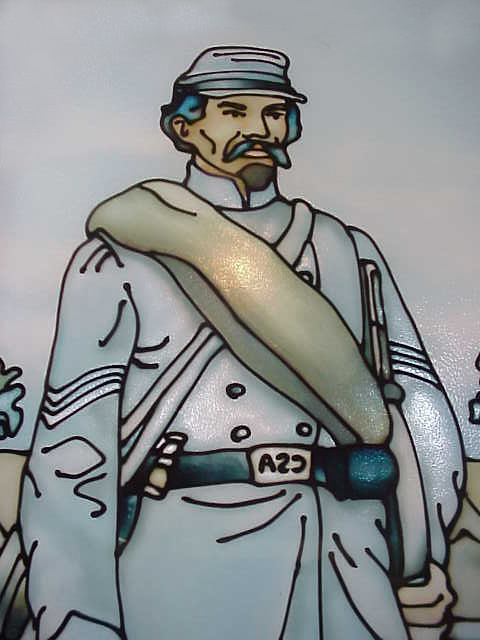
"Stained Glass of a Confederate Soldier of the American Civil War at Bardstown, Kentucky"
photo by Mary Harrsch posted on flickr

When we think of our country's soldiers today, we think of them as all clothed with the same uniforms, fed and living in standardized barracks.  That wasn’t always the case for Confederate soldiers such as my 2GreatGrandfather, Thomas Lumpkin Camp.  Excerpts from some of the letters he wrote to his wife Mary reveal his need for personal items, clothing, and food.


Camp near Dalton, Georgia
Dec. 25, 1862

My Dear Mary,
….. You need not send me any yarn shirt as the winter will soon be over.  If you can sell it, you can do so.  Send me some socks when Dave comes ….. 
 _ _ _ _ _ _ _ _ _ _ _ _ _ _ _ _ _ _ _ _ _

Camp near Loudon, Tenn
Oct the 29th, 1863

My Dear Mary,
 ….. I have not heard any thing from my blanket, and I never expect to.  I think Dave will get home after [a] while; you can send me my blanket by him and one pair of socks and that will do me some time until spring.  If we should take winters [here] I may want a green shirt and drawers. 
_ _ _ _ _ _ _ _ _ _ _ _ _ _ _ _ _ _ _ _ _ _ 

Camp near Chattanooga
Nov. 22nd, 1863

My Dear Mary,
….. I want a pair of half soles for my shoes.  If this should come to hand before R. T. Harlson starts back, [I need] one yarn shirt and a pair of socks.
_ _ _ _ _ _ _ _ _ _ _ _ _ _ _ _ _ _ _ _ _ _ 
  
Camp 40th Georgia Regiment
April 14th, 1864

My Dear Mary,
….. I want you to send me one of them old pocket books by Dave or Mr. Goodson at the first chance, ….. one of the two, I want to have it fixed.
 _ _ _ _ _ _ _ _ _ _ _ _ _ _ _ _ _ _ _ __ _

Camp 40th Georgia
May the 20th, 1864

My Dear Mary,
….. .  I will say to you that I am needing some fronts ..... so if you can make me any you can do so if you have any cotton cloth that will do.  If you can not, get jeans.  I much rather have jeans ….. I want you to make me a nice suit this summer if the Yankees do not break you up.
_ _ _ _ _ _ _ _ _ _ _ _ _ _ _ _ _ _ _ _ _ _ 

Camp near Cave Spring [Georgia]
Oct the 10th, 1864

My Dear Mary,
….. This is a fine country and as fine crops as I ever saw in my life.  We will [gather] as long as there are as many potatoes as what is in this country.  I have been living better for the last week that I have since I have been in the War.  On last Friday night I came by Sister’s, and she loaded me with chicken and bread, on the way came by Uncle Burrell Camp’s, and he filled his saddlebag with bread and potatoes and his bucket with as good butter as you ever saw.  So we are living alright now.

Socks, jeans, food, just a few of the necessities to make life as a soldier a little more bearable.


* These letters are part of the "Camp Family Papers, 1858-1877" which are housed in the Manuscript, Archives, and Rare Book Library (MARBL) of Emory University in Decatur, Georgia.  The letters was transcribed using Transcript freeware.  Some of the spelling, punctuation, and syntax were corrected in this post for ease in reading.  ... is used to indicate portions of the letter which were omitted in the post.  [ ] indicates a word or information I have inserted for clarity.